

By: Isatu Yollah Bangura
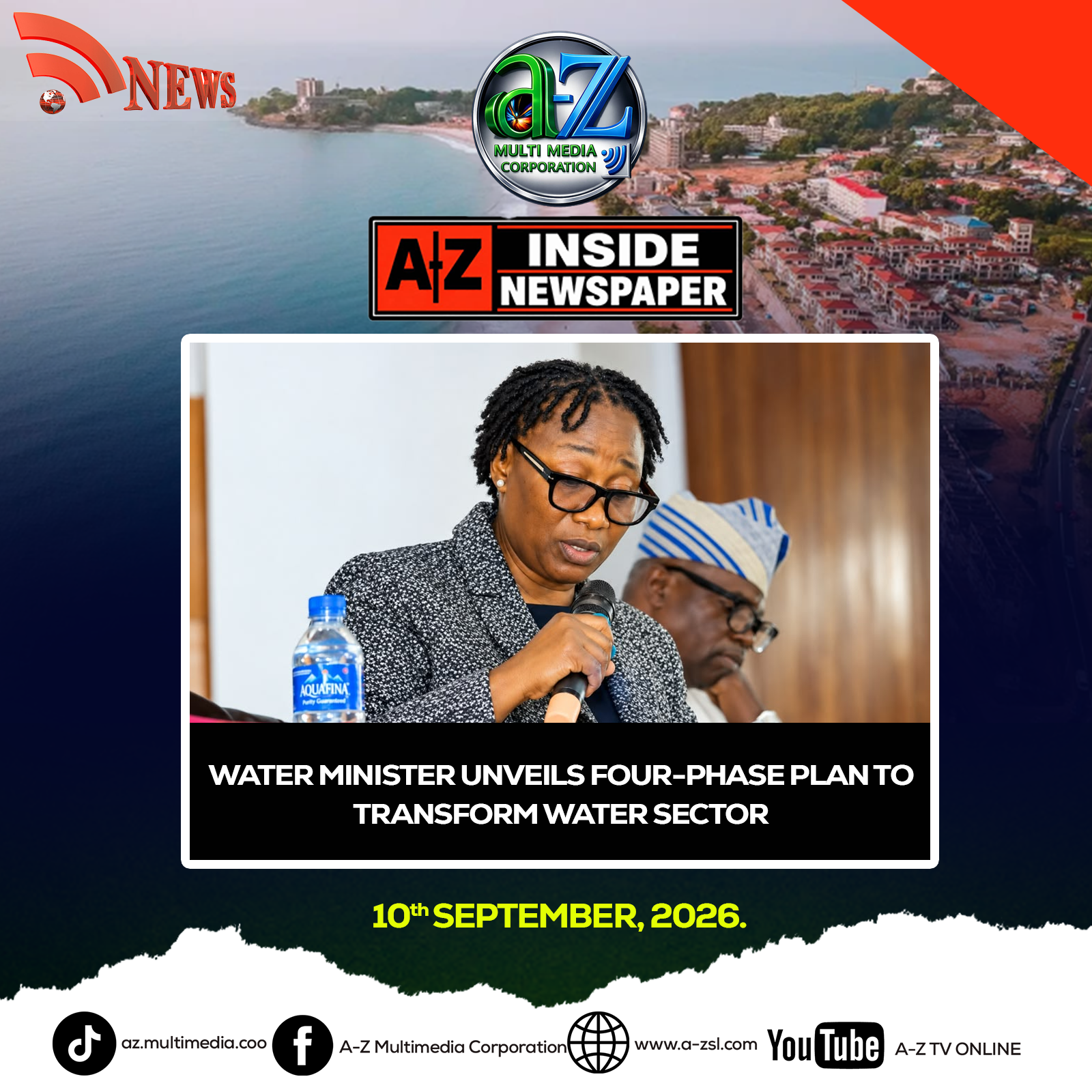
Minister of Water Resources, Dr. Sao Kpato Max Kyne, has outlined a four-phase programme aimed at strengthening Sierra Leone’s water sector, protecting water sources, expanding access to safe drinking water and improving sanitation across the country.
The Minister also clarified that the widely cited US$1.7 billion water-sector figure represents the estimated investment required to address the country’s longstanding water and sanitation challenges, and should not be interpreted as money already secured or currently available to Government.
Dr. Kyne said the Government inherited significant challenges in the water sector, including inadequate infrastructure, institutional weaknesses, water-source protection concerns and poor sanitation services.
She explained that the estimated US$1.7 billion reflects the broader financial requirement for addressing these challenges over time.
Dr. Kyne disclosed that US$40 million has been secured from the World Bank for the first phase of the programme.
According to the Minister, the funding will focus on strengthening the capacity of the Ministry of Water Resources and its agencies to effectively plan, implement and monitor water-sector projects.
She said strong institutions are critical to ensuring that investments in the sector are properly managed and deliver sustainable results.
The Minister explained that Government’s intervention will be implemented in four broad phases.
The first phase will focus on institutional strengthening and capacity building, enabling relevant water-sector institutions to better perform their responsibilities.
The second phase will concentrate particularly on the Western Area Peninsula, with emphasis on protecting water sources and catchment areas from human activities that could affect the quality and availability of water.
Dr. Kyne said Government would work closely with communities and other stakeholders to protect areas that are critical to the country’s water supply.
The third phase will focus on increasing water supply and expanding access to safe drinking water.
She said Government intends to invest in infrastructure for storing, treating and distributing water, including support for the Guma Valley Water Company to develop dams and other facilities aimed at increasing water availability.
As part of the modernization programme, Dr. Kyne also disclosed that approximately 23,000 smart water meters are expected to be brought into the country through World Bank support.
She said the meters would strengthen monitoring of water consumption, improve accountability and provide better information on consumption patterns.
The fourth phase will focus on sanitation, including improved practices for the construction, use and disposal of waste from toilets.
The Minister said sanitation must be treated as an integral part of water security because poor sanitation can contaminate water sources and pose risks to public health.
Dr. Kyne assured citizens that Government’s water-sector interventions would not be restricted to Freetown and the Western Area.
She said communities across the provinces would also be targeted as Government works to expand access to safe and reliable water throughout Sierra Leone.
The Minister described water as an important driver of economic development and said Sierra Leone must make better use of its significant freshwater resources while ensuring that citizens have access to safe and affordable water.
While the US$40 million World Bank financing for the first phase and the planned introduction of about 23,000 smart meters were presented as concrete components of the current programme, Dr. Kyne reiterated that the broader US$1.7 billion figure represents the estimated investment requirement for tackling the sector’s overall challenges.
She said Government is working with development partners, particularly the World Bank, to gradually mobilize the resources needed to implement the various interventions.
Dr. Kyne emphasized that Government does not intend to solve all of the country’s water-sector problems at once, but will instead address them through phased and carefully planned investments.
She said the ultimate objective is to improve the quality, availability and reliability of water for citizens in Freetown and the provinces, while protecting the country’s water resources and ensuring their sustainable management for future generations.