

By: Morlai Sesay
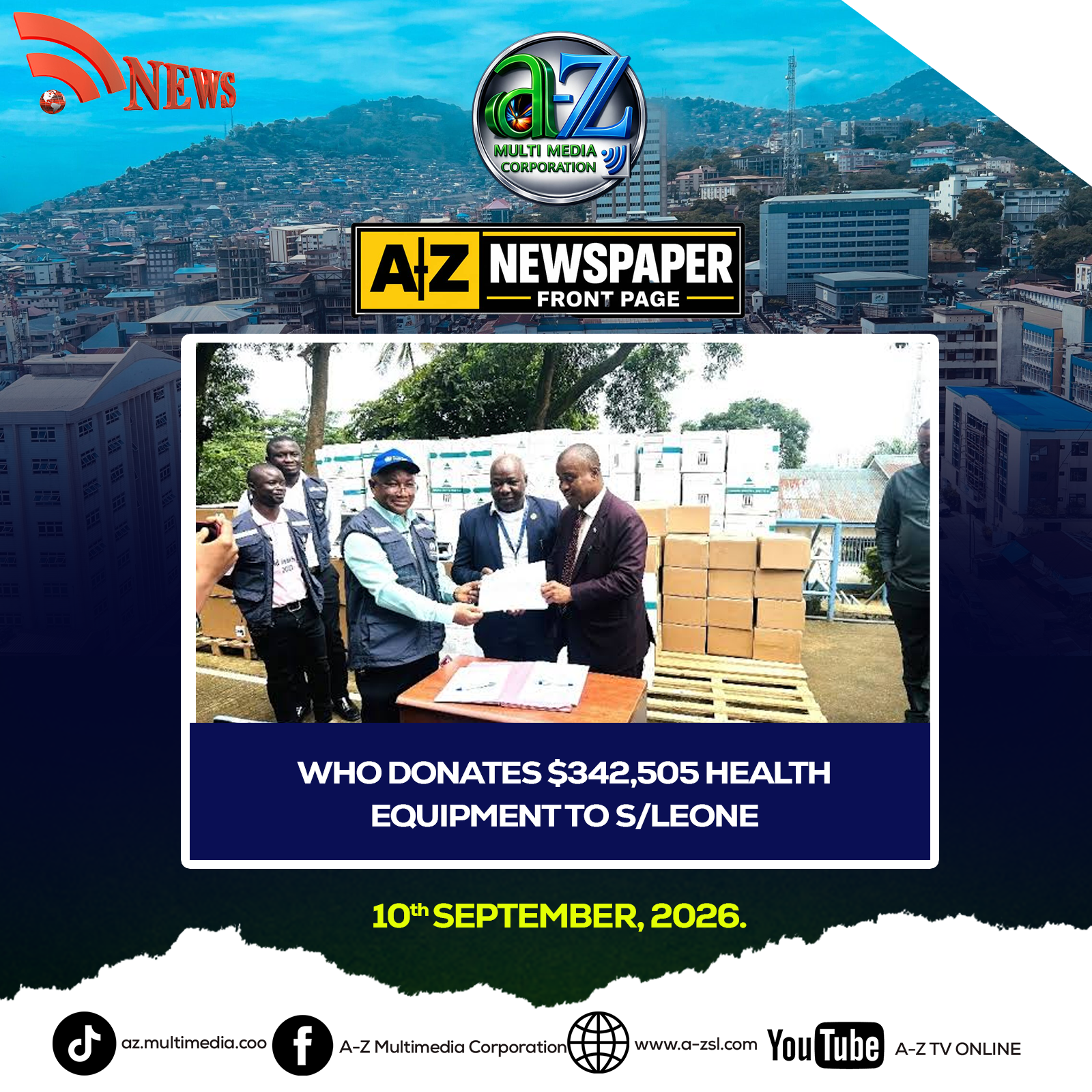
The World Health Organization (WHO) has donated essential health equipment valued at US$342,505 to the Ministry of Health to strengthen Sierra Leone’s laboratory systems, disease surveillance, and women’s health services.
The donation, made on Monday, September 7, 2026, focuses on three key areas: laboratory strengthening, cervical cancer prevention and treatment, and polio surveillance.
As part of the package, WHO provided liquid nitrogen manufacturing equipment valued at US$147,127 to the National Biosafety Laboratory at Benguema. The equipment will enable Sierra Leone to produce liquid nitrogen locally, reducing the country’s dependence on costly external suppliers.
Health authorities say local production will ensure a more sustainable supply of liquid nitrogen for specimen preservation, diagnostics, disease surveillance, and medical research. It will also improve the storage and transportation of temperature-sensitive biological materials and strengthen the country’s preparedness and response to disease outbreaks.
The Deputy Minister of Health said the investment would contribute to building resilient laboratory systems and strengthening health security across the country.
In support of cervical cancer prevention and treatment, WHO donated equipment worth US$163,690, including 30 IRIS digital colposcopes, 12 LEEP machines, and HPV screening kits.
The equipment is expected to strengthen the full continuum of cervical cancer care, from early detection and diagnosis to treatment.
The HPV screening kits will support the early identification of women at risk, while the digital colposcopes will help health workers detect cervical abnormalities. The LEEP machines will enable timely treatment of precancerous lesions, reducing the need for referrals and helping to prevent the progression of cervical cancer.
Health officials said the donation would expand access to quality cervical cancer services and support national efforts to reduce cervical cancer-related illness and deaths among women.
WHO also donated polio specimen transportation materials and Standard Filariasis Antigen Test Kits valued at US$31,688.75.
The materials will facilitate the safe and timely transportation of specimens from communities and health facilities to designated laboratories. The test kits will also strengthen filariasis testing and treatment across the country.
According to health authorities, the support will help maintain specimen quality, improve laboratory confirmation, and enable a faster public health response to suspected disease cases. It will also contribute to Sierra Leone’s efforts to maintain its polio-free status.
The Ministry of Health welcomed the donation, describing it as a timely and strategic intervention that will support the country’s efforts to achieve Universal Health Coverage and strengthen health security.
The donated equipment is expected to be distributed to key hospitals, laboratories, and district health facilities across the country in the coming weeks.