

By: Mamajah Jalloh
The Ministry of Planning and Economic Development (MoPED), through its Rural Development Directorate (RDD), has set out a clear roadmap for the formulation of Sierra Leone’s first Community-Based Organizations (CBOs) Policy.
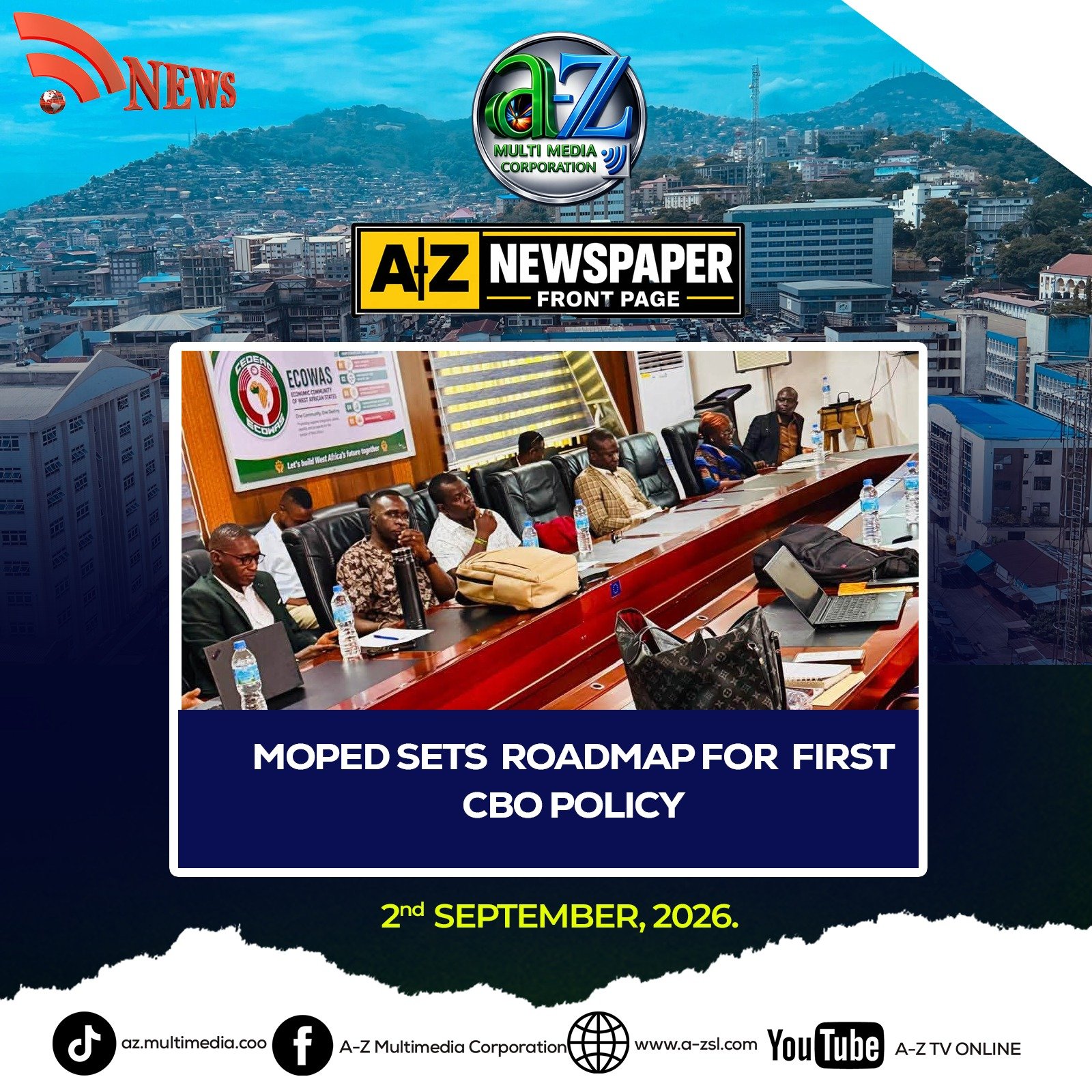
The roadmap was agreed during a Technical Committee meeting held on Monday, 31 August 2026, at the Ministry’s Conference Hall in Tower Hill, Freetown.
The meeting brought together Development Secretary Mr. Ambrose James; Deputy Development Secretary I; Director of the Rural Development Directorate, Mrs. M’balu Kamara; Director of the Development Assistance Coordination Office (DACO), Haja Abie Kamara; President of the Local Councils Association of Sierra Leone (LoCASL), Mr. Sahr A.K. Lamina, who chaired the meeting; as well as representatives from local councils, the Sierra Leone Association of Non-Governmental Organizations (SLANGO), national and international NGOs, and other stakeholders.
Speaking at the meeting, Development Secretary Ambrose James stressed that the proposed policy is not intended to restrict CBOs, but to provide a framework that recognizes their contributions, strengthens their capacity and improves coordination with government and other development actors.
He described the initiative as an opportunity to make history, noting that Sierra Leone has never had a dedicated policy for CBOs. He reaffirmed MoPED’s commitment to the process and called for strong collaboration among stakeholders to meet the December 2026 target.
The Director of Rural Development, M’balu Kamara, highlighted the importance of developing an inclusive and practical policy that reflects the realities, needs and development priorities of communities.
Meanwhile, the Director of DACO, Haja Abie Kamara, underscored the importance of strong coordination and partnerships in mobilising the resources needed to advance the policy process.
She reaffirmed the need for stakeholders to work collectively to ensure that the policy development process receives adequate support and produces a framework that benefits communities.
The Partnership and Localization Manager at Trócaire, Braima Sellu, outlined progress made in resource mobilization, partnership building and preparations for the consultation process. He noted that NGOs had also supported the review of the consultant’s Terms of Reference, budget and work plan.
The Board Chair of SLANGO, Christian Martin Kamara, pledged continued support from national and international NGOs and stressed the importance of ensuring meaningful participation of CBOs throughout the policy development process.
Committee members, including representatives from local councils, welcomed the progress and emphasized the need for clear coordination among CBOs, local councils, NGOs and government institutions.
The committee agreed that consultations would be conducted by two teams working simultaneously across different geographical areas to save time and accelerate the process. It further agreed that all teams would undergo a common orientation to ensure consistency in consultation tools, questions and messaging.
The committee also agreed to fast-track the recruitment of a consultant through a four-member team comprising two representatives from MoPED and two from the NGO community.
15 September 2026 was set as the deadline for resource mobilization from the NGO sector.
To improve public understanding of the policy process, members agreed to develop consistent communication materials, including radio jingles, flyers and messages in local languages, particularly for community-level engagement.
An updated implementation timeline covering consultant recruitment, consultations, drafting, validation and finalization of the policy will also be developed and circulated to committee members.
In his closing remarks, Development Secretary Ambrose James thanked members and partners for their commitment, reiterating that collaboration and adherence to agreed timelines would be critical to delivering the policy.
“Collaboration is the key. If we coordinate and collaborate properly, we can achieve the results we want,” he emphasized.