

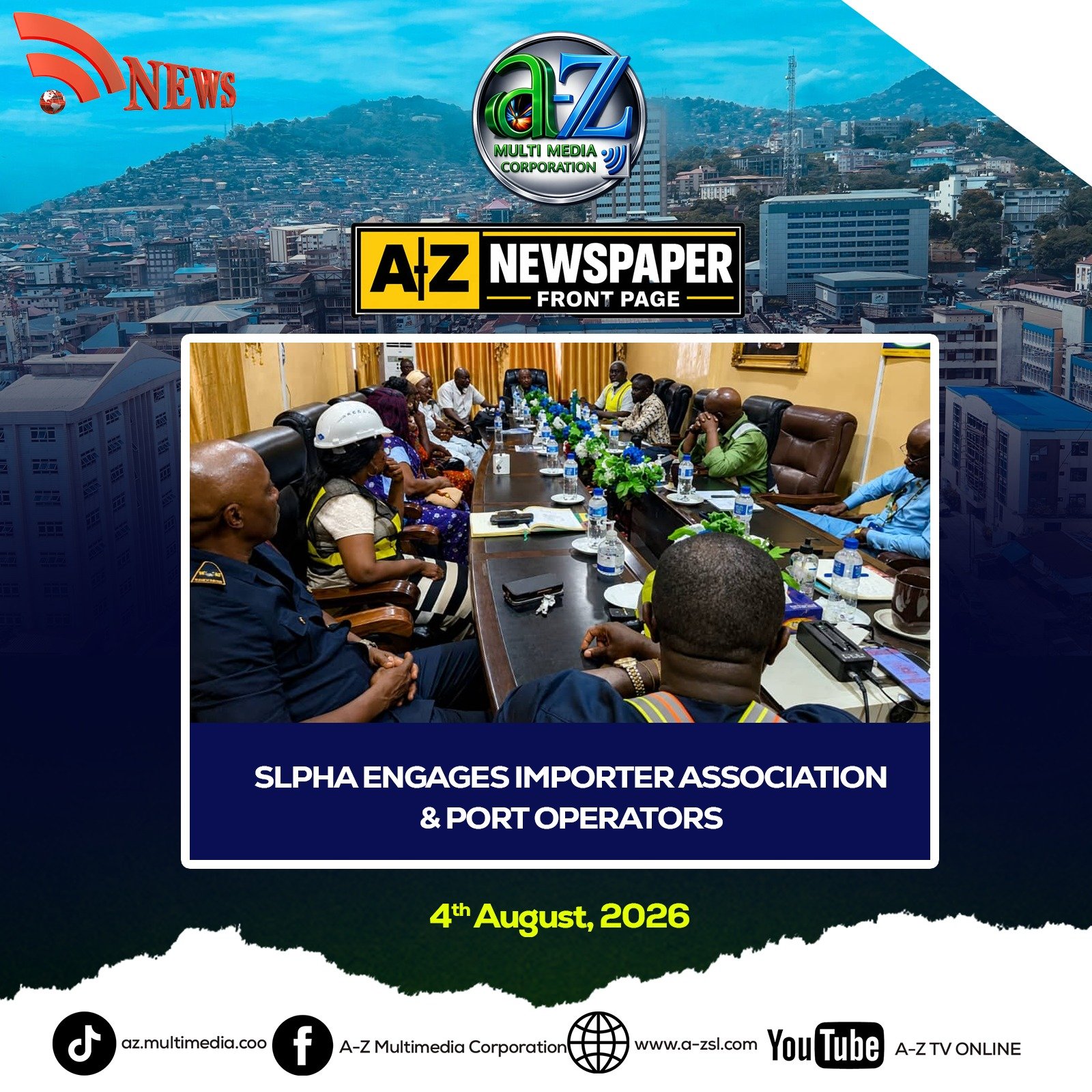
The management of the Sierra Leone Ports and Harbours Authority (SLPHA) has engaged the Importers Welfare Association and key port stakeholders to address concerns over delays in the clearance of imported goods and identify practical solutions to improve operations at the Port of Freetown.
The meeting, held on Friday, July 31, 2026, was chaired by the Director of Operations and Monitoring, Foday Manso Koroma. It brought together representatives of the Importers Welfare Association, the National Revenue Authority (NRA) Customs, Freetown Terminal Limited (FTL), Integrated Trade Service (ITS), the Sierra Leone Customs Brokers Union (SLCBU) and the Indigenous Transport Owners Association (ITOA).
In his opening remarks, Director Koroma described the engagement as a constructive dialogue aimed at identifying bottlenecks in the cargo clearance process and developing practical solutions. He cautioned participants against apportioning blame solely to the SLPHA, stressing that the Authority is not solely responsible for the operational challenges affecting cargo clearance.
During the discussions, representatives of the Importers Welfare Association highlighted several challenges, including delays in clearing goods from the port, the payment of demurrage charges, high haulage costs, alleged preferential treatment in the handling of some containers, difficulties accessing the port and other operational concerns.
The Association noted that some importers spend several months working through clearing and forwarding agents before taking delivery of their goods, describing the situation as detrimental to business operations.
Responding to the concerns, Director Koroma explained that delays in cargo clearance result from both natural and human factors. He cited the limited storage capacity of the Port of Freetown as one of the major physical constraints, noting that the existing facilities cannot adequately accommodate the growing volume of imported containers.
He also attributed some of the delays to human-related factors, including inefficiencies and poor work practices among stakeholders involved in the clearance process.
A representative of the NRA Customs explained the three stages of cargo clearance pre-clearance, clearance and post-clearance and urged importers to pay greater attention to the pre-clearance process to facilitate the timely release of their goods.
The Customs representative also advised importers to ensure that invoices are accurate and that the contents of their containers are properly declared to avoid unnecessary delays.
“These challenges should not be attributed entirely to the SLPHA. If customs brokers report to work on time, the clearance process can move much faster. Once payment is completed, importers should promptly submit their receipts so that we can generate the required wish list,” the Customs representative said.
The meeting concluded with a mutual commitment by the SLPHA and other stakeholders operating at the port to strengthen collaboration and improve the efficiency of cargo clearance processes.
The SLPHA also pledged to review the concerns raised during the meeting and continue engaging stakeholders to develop sustainable solutions.
Representatives of the Importers Welfare Association thanked the management of the SLPHA for creating an open platform for dialogue, saying the engagement had provided greater clarity on the operations and procedures governing cargo clearance at the Port of Freetown.