

By: Aminata Sesay
The Ministry of Information and Civic Education (MoICE) has disclosed significant funding challenges affecting the implementation of its programmes, despite making progress in civic education, public communication, and information governance reforms across Sierra Leone.
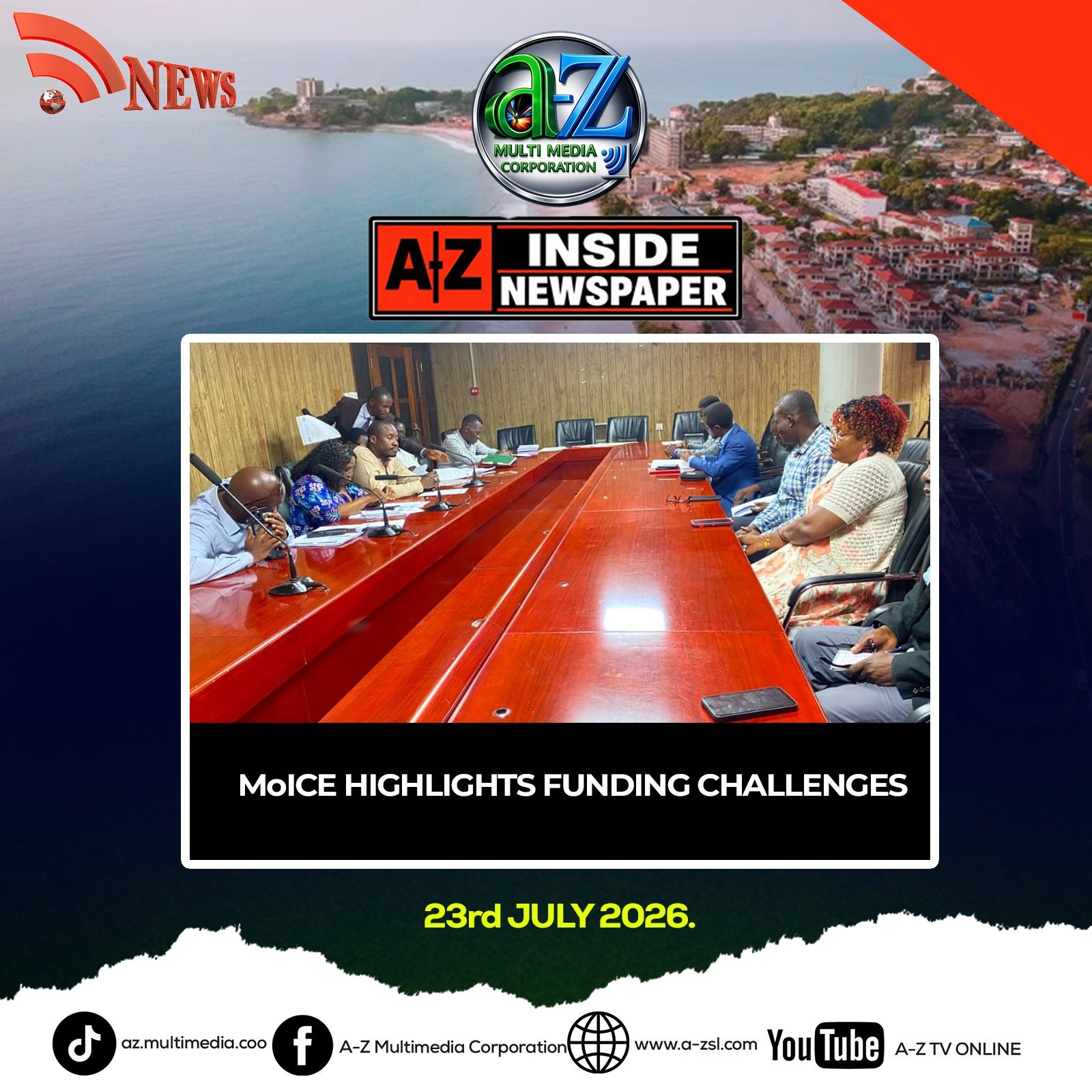
The disclosure was made during an oversight engagement between the Parliamentary Oversight Committee on Information and Civic Education and officials of the Ministry, chaired by Hon. Rosy Kanu.
Presenting the Ministry’s performance report, Timothy Sam, Director of Civic Education and Citizens’ Engagement, identified limited and delayed budget releases as the institution’s major operational challenge, noting that the situation has affected the full implementation of planned activities.
According to Timothy Sam, in 2025, the Ministry requested approximately Le65.89 million but received approval for only about Le8 million, of which approximately Le2.9 million was accessed. For 2026, the Ministry requested about Le93.19 million, received approval for approximately Le7.7 million, but had accessed only around Le2.9 million at the time of the oversight engagement.
Despite these financial constraints, Timothy Sam highlighted several achievements recorded since the establishment of the Ministry in 2023. These include the implementation of the National Civic Education Strategy (2024–2030), nationwide Civic Day programmes, Presidential Town Hall meetings, and the National Civic Festival.
He explained that the Ministry has also expanded school-based civic education programmes in collaboration with the National Council for Civic Education and Democracy (NaCCED) while improving government communication using Krio, local languages, and sign language interpretation to promote greater citizen inclusion.
Timothy Sam further noted that institutional reforms undertaken by the Ministry have led to the establishment of key directorates responsible for Civic Education, Information Services, Planning, Research, Monitoring and Evaluation, and Records and Archives.
He disclosed that progress has also been made on the Privacy and Data Protection Bill, which has been approved by Cabinet and gazetted for submission to Parliament. He added that the revitalization of the Government Printing Department and ongoing information governance reforms remain among the Ministry’s key priorities.
However, members of the Parliamentary Oversight Committee raised concerns regarding budget utilization, procurement processes, vendor selection, and the need for improved documentation to strengthen transparency and accountability.
The Committee requested detailed information on procurement contracts, supplier databases, framework agreements, development partner support, and the Ministry’s coordination with institutions such as NaCCED and the Sierra Leone Broadcasting Corporation (SLBC).
Responding to the concerns, Timothy Sam explained that procurement activities were carried out in accordance with Public Procurement Authority procedures through supplier databases and Requests for Quotations. He added that development partners, including UNDP, UNESCO, and UNFPA, mainly provide technical support and make direct payments to service providers rather than providing direct budgetary support to the Ministry.
He acknowledged the need for stronger collaboration between the Ministry and Parliament, assuring the Committee that lawmakers would be invited to participate in major civic education programmes and public engagement activities.
The Committee commended the Ministry for sustaining nationwide civic education and public information programmes despite financial limitations. However, it urged management to strengthen procurement documentation, financial accountability, and coordination with oversight institutions.
The oversight engagement forms part of Parliament’s broader efforts to assess the performance of public institutions, promote transparency, and identify areas requiring support to enhance service delivery across Sierra Leone.