

By: Saidu Jalloh
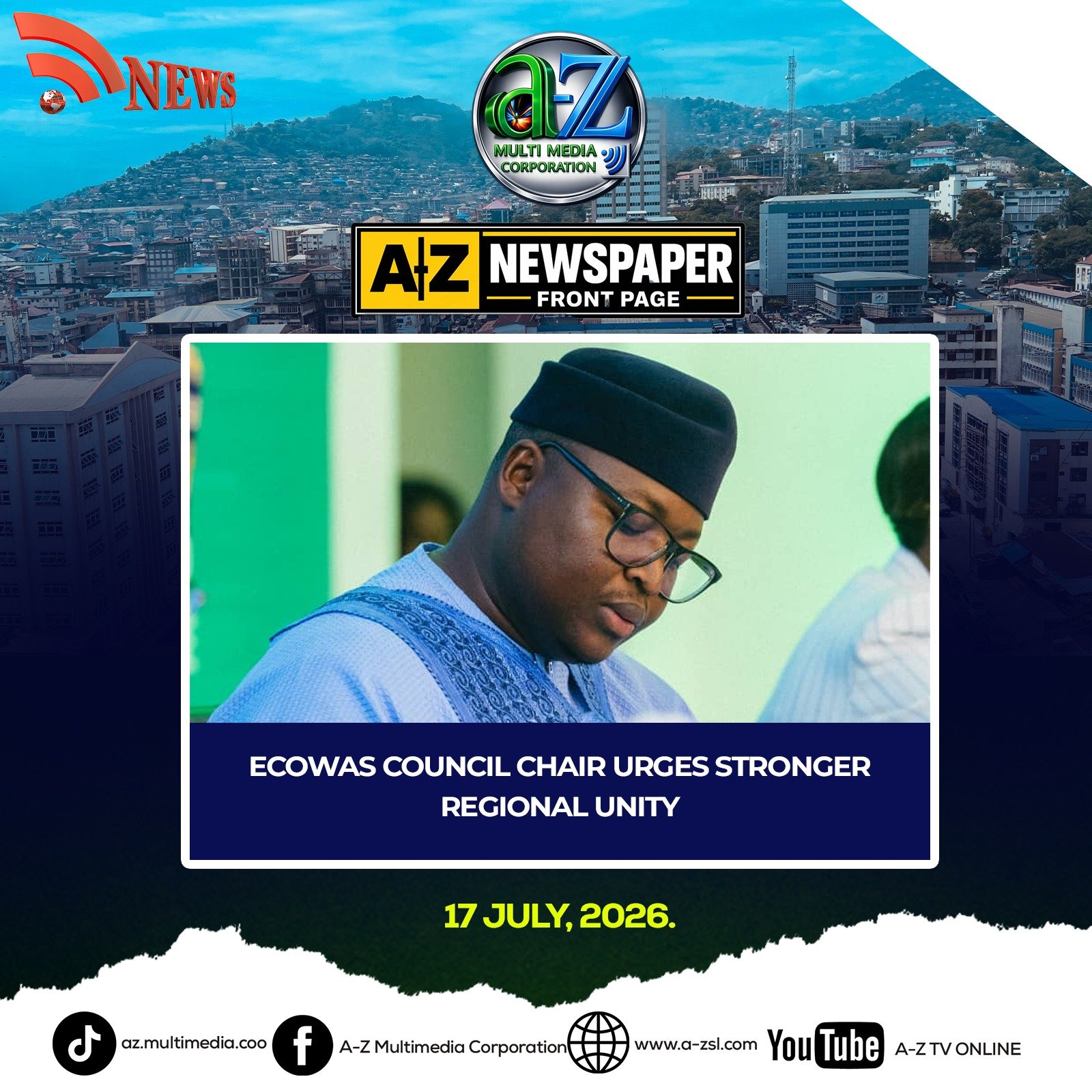
Sierra Leone’s Minister of Foreign Affairs and International Cooperation, Alhaji Timothy Musa Kabba, who chairs the ECOWAS Council of Ministers, has called on Member States to strengthen regional solidarity and adopt practical measures to address West Africa’s growing political, security, and socio-economic challenges.
Kabba made the call at the opening of the 96th Ordinary Session of the ECOWAS Council of Ministers in Freetown, ahead of the 69th Ordinary Session of the ECOWAS Authority of Heads of State and Government.
The high-level meeting brought together foreign ministers, heads of ECOWAS institutions, commissioners, ambassadors, development partners, and senior government officials from across the region to deliberate on key issues affecting the Community.
In his opening address, Minister Kabba welcomed delegates to Sierra Leone, describing the gathering as taking place at a defining moment in the history of the regional bloc. He stressed that ECOWAS must remain united in addressing emerging challenges while upholding its core principles of regional integration, democracy, peace, and sustainable development.
The Minister thanked Member States for entrusting Sierra Leone with the chairmanship of the Council and pledged to ensure that the session would be inclusive, transparent, focused, and results-oriented.
While acknowledging ECOWAS’ achievements over the past five decades, Kabba noted that the region continues to face significant challenges, including economic uncertainty, climate change, terrorism, violent extremism, transnational organised crime, food insecurity, youth unemployment, gender inequality, irregular migration, and unconstitutional changes of government.
He urged Member States to renew their commitment to regional cooperation, emphasizing that the strength of ECOWAS lies not only in its institutions but also in the unity, solidarity, and political will of its members.
According to Kabba, ministers will deliberate on a broad agenda covering institutional reforms, regional peace and security, economic integration, infrastructure development, trade and investment, humanitarian concerns, and the implementation of decisions adopted by the Authority of Heads of State and Government.
He also reaffirmed Sierra Leone’s commitment to building a peaceful, prosperous, and fully integrated West Africa. Kabba noted that under the leadership of President Dr. Julius Maada Bio, the current Chair of the ECOWAS Authority of Heads of State and Government, Sierra Leone continues to champion democratic governance, peacebuilding, gender equality, youth empowerment, and sustainable economic transformation.
Delivering his remarks, President of the ECOWAS Commission, Dr. Omar Alieu Touray, described the session as particularly significant because it would be the last Ordinary Session of the Council of Ministers he would address before leaving office.
Touray thanked President Julius Maada Bio, the Government, and the people of Sierra Leone for hosting the statutory meetings and commended Minister Kabba for his leadership in guiding the work of the Council over the past year.
Reflecting on his four-year tenure, Touray said the Community had navigated one of the most challenging periods in its history, marked by political transitions, worsening security threats, economic uncertainty, and the withdrawal of three Member States from the regional bloc. Despite these challenges, he said the Commission remained committed to implementing the decisions of the Authority, preserving institutional stability, and maintaining dialogue and cooperation across the region.
He highlighted several major achievements during his tenure, including the operationalization of the Permanent Representatives Committee, the commissioning of the Mfum-Ekok Bridge and Joint Border Post linking ECOWAS and ECCAS, the establishment of the ECOWAS Business Council under African industrialist Aliko Dangote, and the completion of the Commission’s new headquarters in Abuja.
Looking ahead, Touray urged ministers to translate the ECOWAS vision into concrete actions capable of addressing the evolving realities of West Africa. He said the Council would consider the 2026 Interim Report on the State of the Community, review the Community’s financial position, assess the implementation of previous decisions, and examine reports from several statutory bodies aimed at strengthening governance, accountability, and institutional effectiveness.
He further disclosed that ministers would deliberate on strategic initiatives covering digital transformation, regional investment promotion, agriculture, trade, science and innovation, telecommunications, gender equality, cultural cooperation, and relations with the Alliance of Sahel States (AES).
As he prepares to conclude his tenure, Touray expressed appreciation to the ECOWAS Authority of Heads of State and Government, the Council of Ministers, Member States, development partners, and ECOWAS staff for their unwavering support throughout his four years in office.
He expressed confidence in the future of the regional bloc, stating that ECOWAS possesses resilience, institutional capacity, and political will to continue advancing peace, stability, economic integration, and sustainable development across West Africa.
The recommendations adopted during the Council’s 96th Ordinary Session will be forwarded to the ECOWAS Authority of Heads of State and Government for consideration at its 69th Ordinary Session.