

By: Aminata Sesay
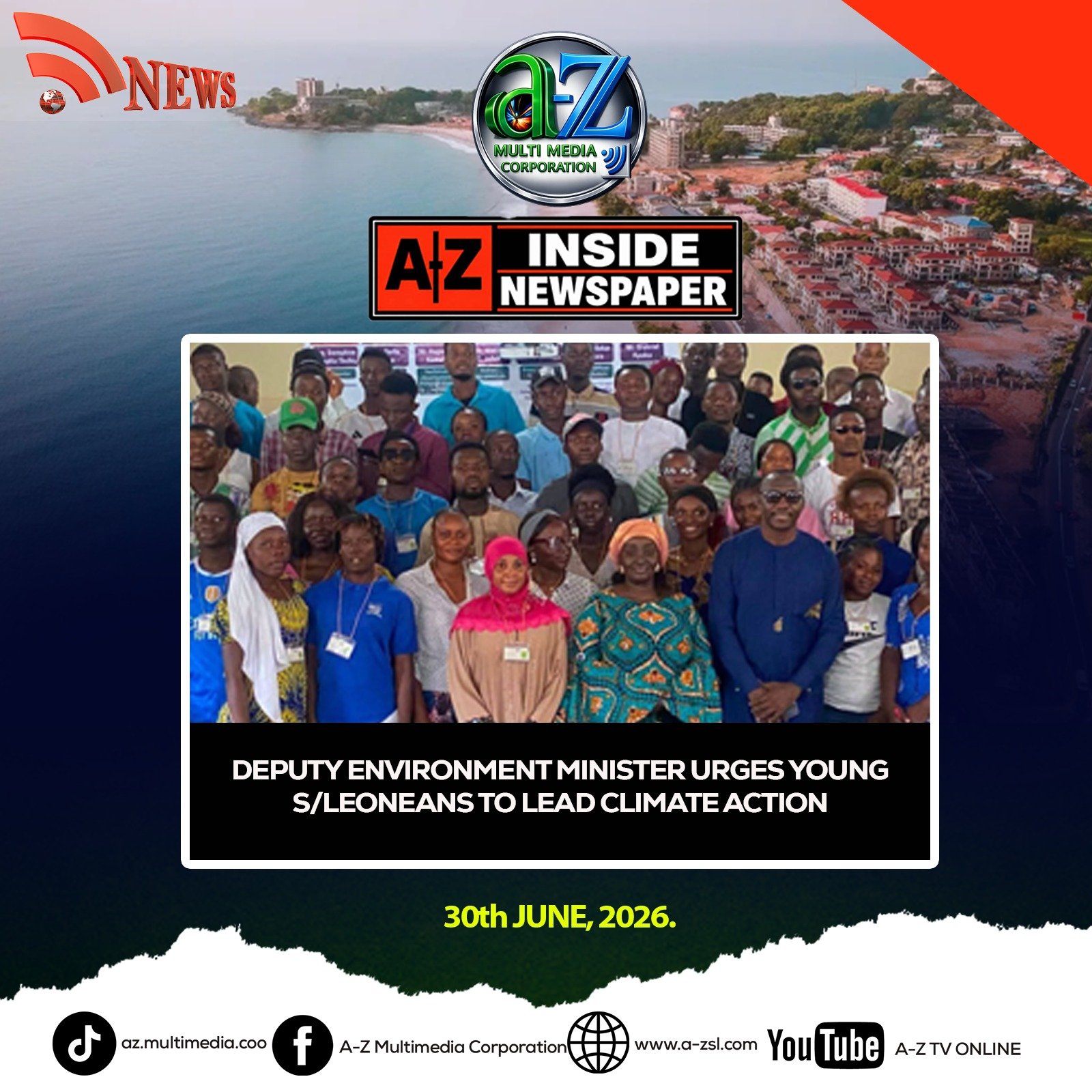
Deputy Minister of Environment and Climate Change, Hon. Mimi Sobba-Stephens, has called on young Sierra Leoneans to take a leading role in protecting the country’s natural resources, warning that the growing impacts of climate change require urgent action from every sector of society.
She made the call during the Youth Climate Resilience and Environmental Stewardship Training Initiative, held on 26 June at the Milton Margai Technical University campus. Addressing participants, the Deputy Minister described young people as critical partners in building a climate-resilient Sierra Leone.
The training, held under the theme “Climate Change and Environmental Duty of Care,” brought together students, lecturers, environmental experts, representatives from Ministries, Departments and Agencies (MDAs), and other stakeholders to discuss climate resilience, environmental protection, and sustainable development.
Hon. Sobba-Stephens said Sierra Leone’s wetlands, mountains, beaches, forests, and rich biodiversity are valuable national assets that must be protected, stressing that environmental stewardship extends beyond government institutions.
She emphasised that safeguarding the environment is a shared responsibility, particularly for young people who will inherit the long-term consequences of today’s environmental decisions.
“Caring for our environment is not merely a government responsibility it is a shared duty. Every citizen has an obligation to protect the natural resources upon which our lives and livelihoods depend,” she said.
The Deputy Minister highlighted several environmental challenges facing the country, including rising temperatures, erratic rainfall patterns, flooding, landslides, coastal erosion, deforestation, biodiversity loss, and increasing threats to food security and public health.
She noted that these challenges make youth participation in climate action more important than ever, adding that young people possess the creativity, technological skills, and innovative thinking needed to develop practical solutions to environmental problems.
According to her, youth-led initiatives such as tree-planting campaigns, recycling projects, climate-smart agriculture, and digital environmental advocacy demonstrate the significant contribution young people can make to environmental sustainability.
“This initiative is an investment in future leaders, innovators, environmental defenders, and climate champions who will shape Sierra Leone’s environmental future,” Hon. Sobba-Stephens stated.
She also highlighted the government’s ongoing efforts to strengthen climate resilience and environmental governance through improved climate policies, ecosystem restoration programmes, sustainable land management initiatives, and partnerships that support climate adaptation.
The Deputy Minister commended key environmental institutions, including the Environment Protection Agency Sierra Leone (EPA-SL), the Sierra Leone Meteorological Agency (SLMet), and the National Protected Area Authority (NPAA), for their continued work in environmental regulation, biodiversity conservation, weather forecasting, and natural resource management.
She further credited the administration of President Julius Maada Bio for prioritising climate resilience, environmental protection, and youth empowerment, while advancing Sierra Leone’s advocacy for climate justice and increased international support for vulnerable countries facing the effects of climate change.
In her closing remarks, Hon. Sobba-Stephens encouraged participants to become environmental ambassadors and use their knowledge, skills, and influence to promote sustainable practices within their communities.
“Be innovators who create sustainable solutions. Be advocates who inspire others. Be leaders who act with integrity. Never underestimate the power of your voice or your actions,” she urged.
The training concluded with renewed commitments from participants and stakeholders to strengthen youth participation in climate action and work collectively to protect Sierra Leone’s environment for future generations.