

By: Aminata Sesay
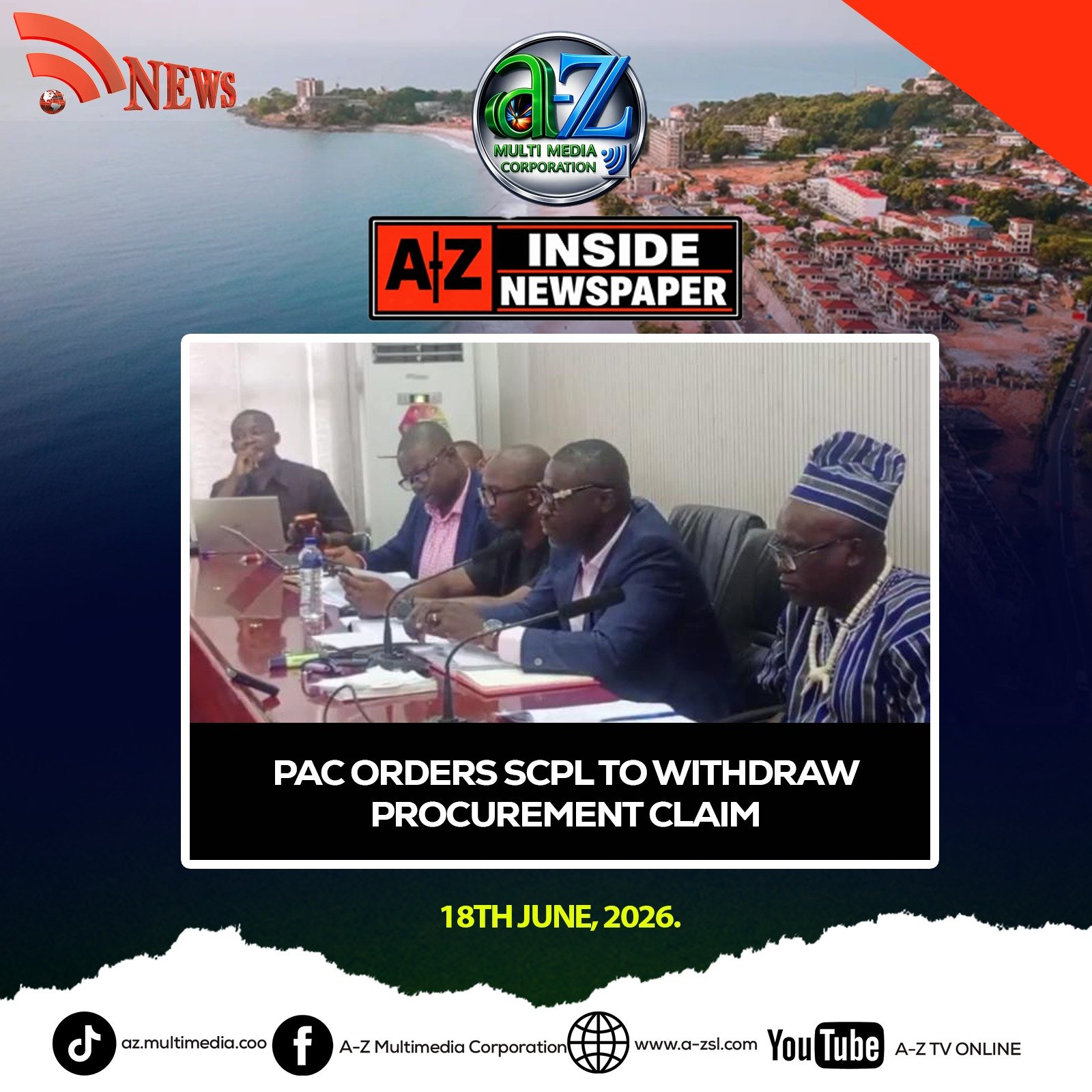
The Public Accounts Committee (PAC) of Parliament has directed Sierra Concrete Products Limited (SCPL) to withdraw a management response in which the company claimed it was a private entity and therefore not subject to public procurement regulations.
The directive was issued during an audit hearing chaired by the Chairman of the Public Accounts Committee, Hon. Ibrahim Tawa Conteh, as lawmakers continued their examination of an audit query relating to the procurement of vehicle spare parts valued at NLe120,000.
Auditors had raised concerns over the procurement process, stating that it did not comply with the requirements of the Public Procurement Regulations. In response, SCPL maintained that it was not bound by public procurement laws because it operates as a private company.
However, members of the Committee rejected that position, arguing that SCPL’s ownership structure places it under an obligation to comply with public procurement regulations, particularly because its majority shareholder is a public institution.
Hon. Ibrahim Tawa Conteh instructed the company’s management to formally retract the statement, acknowledge that the response was inappropriate, and provide written assurance that all future procurement activities would be conducted in accordance with guidelines issued by the National Public Procurement Authority (NPPA).
SCPL management accepted the Committee’s directive and pledged to ensure full compliance with procurement laws and procedures going forward.
Beyond the audit query, the hearing revealed broader institutional and operational challenges affecting the company.
Company representatives informed lawmakers that SCPL is facing significant financial difficulties, which have adversely affected its ability to recruit and retain essential staff. They disclosed that several approved positions remain vacant due to the company’s inability to meet salary obligations and other operational costs.
The absence of a dedicated procurement officer also raised concerns among Committee members. Management admitted that procurement responsibilities are currently being handled by senior company officials, rather than a qualified procurement specialist.
The Committee warned that the lack of specialized personnel could weaken internal controls, undermine procurement processes, and increase the risk of future compliance issues.
Further concerns emerged regarding corporate governance after SCPL disclosed that it has operated without a Board of Directors for approximately eight years following the withdrawal of board representatives by its majority shareholder, the National Social Security and Insurance Trust (NASSIT).
Lawmakers observed that challenges relating to governance, staffing, procurement compliance, and the long-term sustainability of the company require broader engagement between SCPL, NASSIT, and other relevant stakeholders.
During the hearing, a company representative’s description of Parliament’s proposed stakeholder engagement as a “so-called session” drew criticism from the Committee Chairman, who described the expression as inappropriate and inconsistent with the respect due to Parliament. The representative later apologized and clarified that the remark was not intended to undermine the authority of the House.
The Public Accounts Committee maintained that the withdrawal of the procurement response and SCPL’s commitment to comply with procurement regulations would resolve the specific audit query. However, the Committee noted that the wider governance and operational challenges facing the company would require further discussions and stakeholder engagement aimed at strengthening SCPL’s institutional effectiveness and corporate governance framework.
The hearing forms part of Parliament’s ongoing efforts to promote accountability, transparency, and sound management practices within public institutions and state-linked enterprises.