

By: Audrey Raymonda John
The Girl Child Network (GCN), in collaboration with Partners In Health (PIH) Adolescent and Youth Friendly Services, the Girls Empowerment Network, the Sickle Cell Anaemia Network, and Uman en Pikin Welbodi, has taken significant steps to address period poverty and break long-standing taboos surrounding menstruation in Kono and Tonkolili Districts.
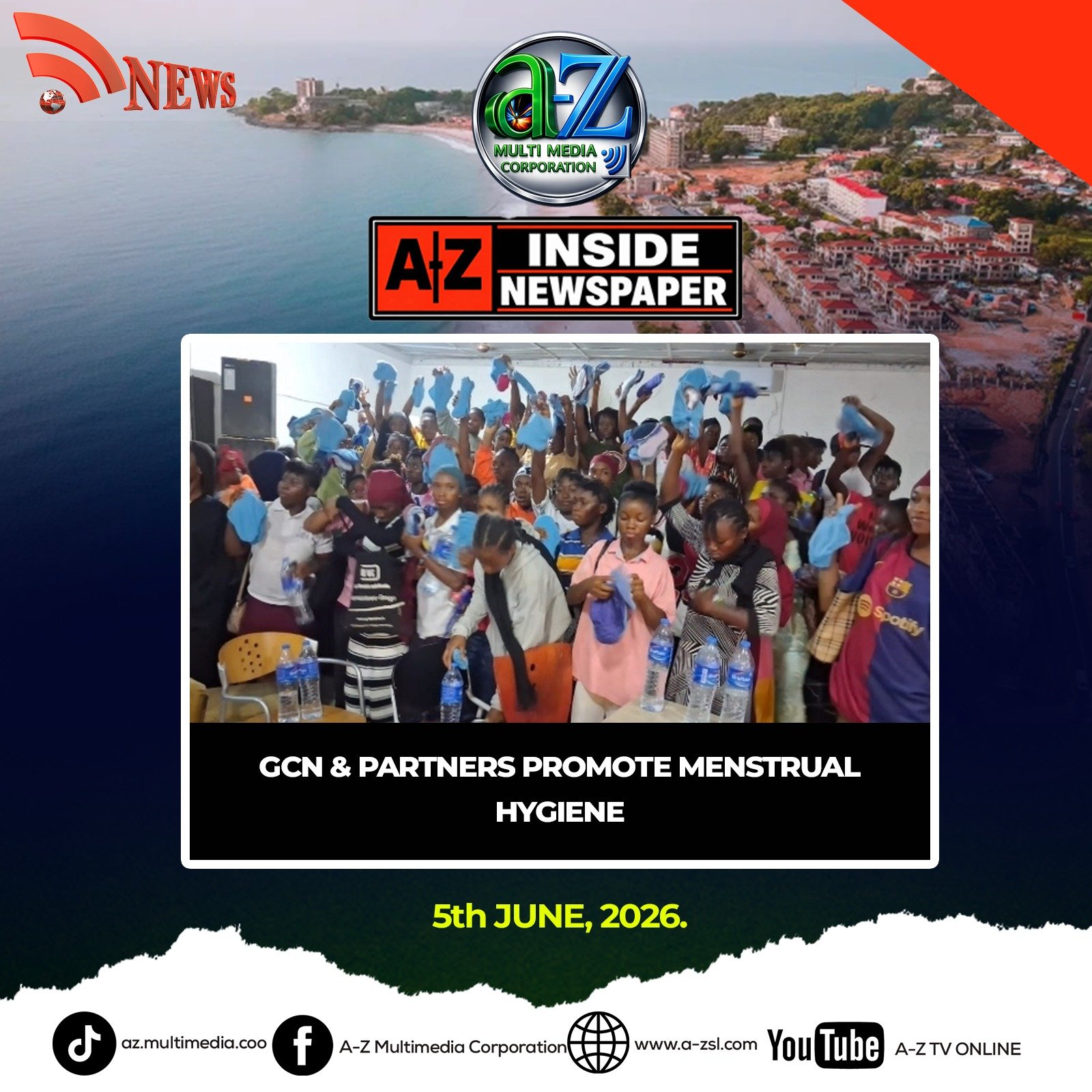
In Kono District, the initiative trained 100 adolescent girls on menstrual hygiene management, while in Magburaka, Tonkolili District, stakeholders and school-going girls also benefited from similar training. In addition, Uman en Pikin Welbodi distributed 300 reusable EcoJC sanitary pads to four schools in the district.
The programme was implemented between 24th and 26th May in Kono District, and from 28th May to 1st June 2026 in Tonkolili District. It brought together students, teachers, community leaders, parents, and other stakeholders to address one of the most overlooked barriers to girls’ education and well-being.
The organisations noted that their menstrual hygiene initiatives date back to 2011, when they began advocacy efforts after recognizing that a lack of menstrual health knowledge contributed to teenage pregnancies and school absenteeism. In 2014, the Girl Child Network expanded its work by leading advocacy campaigns and distributing EcoJC reusable sanitary pads to schools.
EcoJC Pad Enterprise, led by Chief Executive Officer Madam Anita Koroma, continues to focus on rural communities that often struggle with the high cost of disposable sanitary products.
Before engaging schools, the organisations conducted community consultations in several villages to raise awareness about menstrual hygiene management (MHM) and to challenge the stigma, myths, and cultural taboos surrounding menstruation.
The initiative forms part of a broader global movement toward creating a period-friendly world, ensuring that menstruation does not prevent girls from accessing education, participating fully in society, or achieving their potential.
Across Sierra Leone, many adolescent girls continue to face period poverty, a condition in which they lack access to affordable sanitary products, accurate information, and adequate facilities to manage menstruation with dignity.
For girls in low-income communities, the inability to afford sanitary products often results in school absenteeism during their menstrual cycles. Some miss several days of school each month, leading to significant learning gaps over time.
To address this challenge, the organisations promoted the use of EcoJC reusable sanitary pads as a practical, affordable, and environmentally sustainable alternative to disposable products.
These reusable pads offer cost savings for families, provide comfort and reliability, and can last between one and two years when properly maintained. They also help reduce environmental waste caused by disposable sanitary products.
Speaking during the training sessions in Kono and Tonkolili, the Executive Director of the Girl Child Network, Madam Anita Koroma, emphasized that menstrual health should never be a barrier to education.
She explained that many girls in underserved communities continue to miss valuable classroom time because they cannot afford reliable menstrual hygiene products.
According to Madam Koroma, the programme goes beyond the distribution of sanitary pads.
“The objective is to equip girls with the skills to produce reusable pads themselves, empowering them to become self-reliant and to share this knowledge with their peers, families, and communities,” she said.
She further noted that locally producing reusable sanitary kits can significantly reduce household expenses while ensuring sustainable menstrual health solutions for girls.
Participants were also provided with materials and practical training to continue producing reusable pads at home, enabling them to support themselves and potentially assist other girls in their communities.
One student in Kono shared her experience of how menstruation had affected her education.
“Menstruation made it difficult for me and many other girls to attend school because we did not always have access to sanitary pads. Sometimes, we preferred to stay at home rather than face embarrassment at school. Because of my family’s financial situation, buying sanitary pads regularly was very difficult,” she explained.
Her story reflects the experiences of thousands of girls across Sierra Leone who continue to face challenges in managing their menstrual health safely and with dignity.
Advocates argue that improving menstrual hygiene management is not only a health issue but also an education, gender equality, and human rights issue.
Access to menstrual products, accurate information, and supportive environments enables girls to remain in school, improve academic performance, build self-confidence, and participate fully in community life.
The organisations believe that initiatives such as reusable pad production and menstrual health education are critical tools for reducing school absenteeism, combating period poverty, improving health outcomes, and promoting the dignity of adolescent girls.
As conversations around menstrual health continue to grow across Sierra Leone, such programmes are helping to ensure that no girl is forced to choose between her education and managing her period with dignity.