

By: Mohamed Sahr
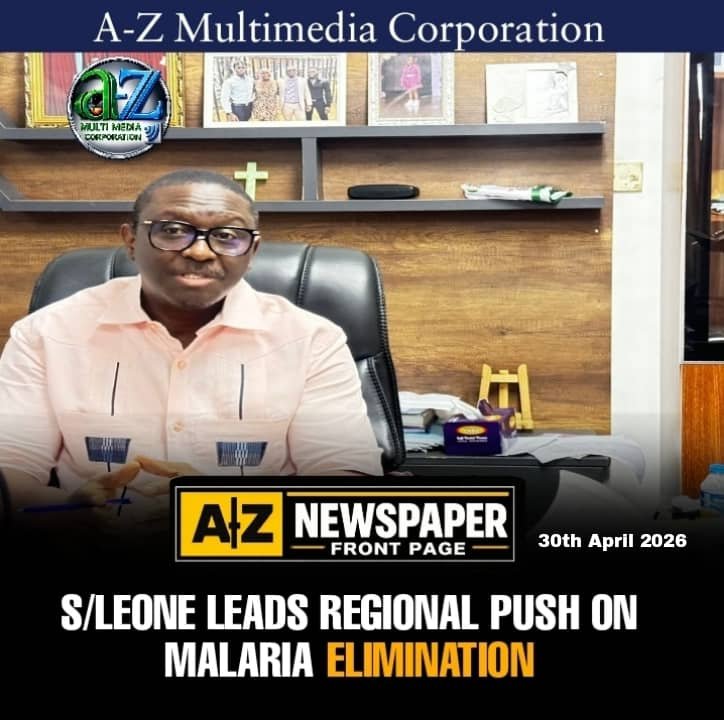
Andrew Lawrence Sorie, Senior Permanent Secretary of Ministry of Health has said that Sierra Leone played a leading role in regional health discussions after hosting the 27th Ordinary Session of the ECOWAS Assembly of Health Ministers.
Speaking in an interview on Wednesday, April 29, 2026, at the Youyi Building, Sorie explained that the high-level meeting, convened by the West African Health Organization, brought together health leaders from across West Africa to address shared public health challenges, with a strong focus on malaria, which continues to pose a major threat in the region.
He noted that the key outcome of the session was a renewed regional commitment to malaria elimination. Another major milestone, he added, is that Sierra Leone is preparing to become one of the first countries in Africa to introduce the malaria vaccine as part of its national health strategy.
Sorie explained that the Assembly is a statutory annual event organized by WAHO, the ECOWAS agency responsible for coordinating health matters across member states. Each year, a member country hosts a meeting, where health ministers review technical reports before making policy decisions.
“This process starts with technical reviews by liaison officers, followed by assessments from Chief Medical Officers, and finally decisions are made at ministerial level,” he said.
He added that while several health issues were discussed, malaria remained the central focus due to its continued impact across West Africa.
Ministry of Health Senior Permanent Secretary expressed pride in Sierra Leone’s role as host, noting that feedback from ECOWAS member states and WAHO was overwhelmingly positive, with many describing it as one of the best-organized assemblies in recent years.
He attributed this success to careful planning, including the establishment of a steering committee responsible for logistics, technical coordination, and stakeholder engagement.
Importantly, he said Sierra Leone used the platform to highlight the strong link between malaria and maternal mortality. Although the country has made significant progress in reducing maternal deaths, malaria remains a major contributing factor. This informed the development of the Freetown Charter, which outlines steps to reduce preventable deaths, especially among women and children.
“We believe zero preventable deaths from malaria is achievable,” Sorie said, stressing that this goal requires a multi-sectoral approach involving education, local government, infrastructure, and community participation.
He explained that the government is scaling up preventive measures, including the distribution and use of insecticide-treated bed nets, improved environmental sanitation, and mosquito breeding control. At the same time, treatment systems are being strengthened to ensure malaria medicines are available in all health facilities for rapid response.
Sorie also highlighted the introduction of the malaria vaccine as a breakthrough. He said that while traditional interventions such as bed nets and indoor spraying remain essential, vaccination adds a crucial layer of protection, particularly for children, who are most vulnerable.
The vaccine, he said, is being rolled out as part of a continuous national programme to ensure it becomes a routine and accessible intervention, significantly reducing infections and saving lives.
He further emphasized that consistent use of bed nets remains one of the simplest and most effective ways to prevent malaria, especially since mosquitoes are most active at night.
In addition, he noted that drug supply chains are being strengthened to ensure immediate treatment for infected patients, while vaccination efforts are being scaled up as part of a long-term elimination strategy.
Sorie also pointed to Sierra Leone’s broader health achievements, including a 70 percent reduction in maternal mortality over the past three years, which has gained international recognition.
He said the country has also achieved over 90 percent vaccination coverage and recently vaccinated more than 1.1 million people during a nationwide HPV campaign conducted within two weeks.
“These achievements, along with our digital health systems that allow real-time data reporting, show that Sierra Leone is not only improving domestically but also contributing solutions to regional health challenges,” he said.
He noted that lessons from previous health campaigns highlight the importance of early communication and strong collaboration, particularly with the education sector to reach school-based populations.
However, he acknowledged ongoing challenges, especially logistics such as transportation for health workers and supply distribution, as well as funding constraints. Despite this, he said government support remains strong, with health prioritized under the Human Capital Development agenda.
At the regional level, he emphasized the importance of continuing collaboration through ECOWAS to ensure sustained progress.
Looking ahead, Sorie said the next step is implementation of decisions taken at the Assembly, including the Freetown Charter, which focuses on reducing maternal and infant mortality across the region.
He concluded that the initiative is not solely for Sierra Leone but a collective West African effort. With coordinated action and sustained commitment, he expressed confidence that significant improvements in health outcomes will be achieved across the region.