By: Precious Miracle Kargbo Snr
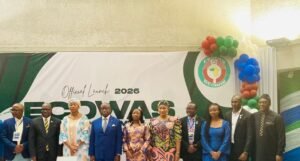
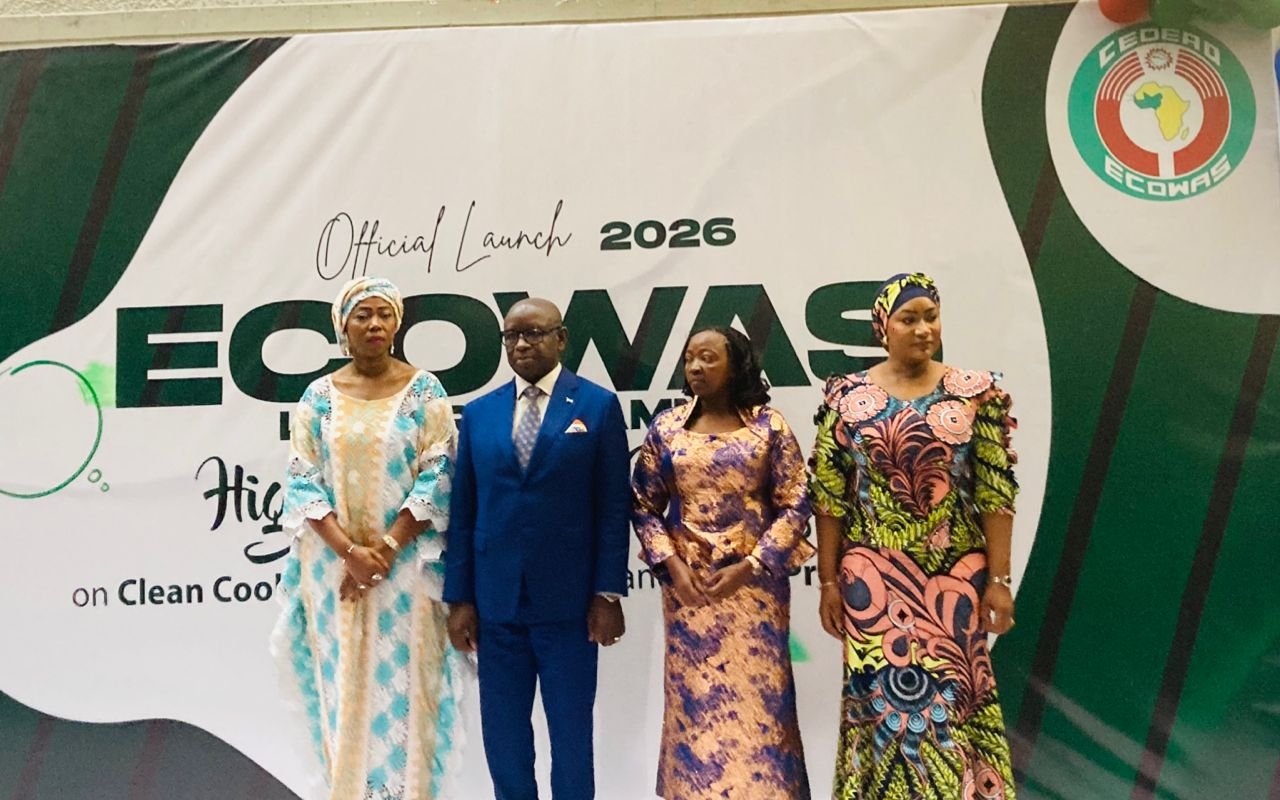
Sierra Leone took a major step in addressing energy poverty on Tuesday 28th April 2026 by hosting the launch of the ECOWAS 2026 LPG Programme in Freetown an ambitious regional initiative aimed at expanding access to clean cooking, advancing gender equality, and reducing the health risks associated with household air pollution.
The event marked the pilot rollout of the ECOWAS LPG initiative in Sierra Leone and The Gambia. The programme forms part of a broader regional strategy to increase liquefied petroleum gas (LPG) usage from 21% to 45% by 2030 and distribute 20 million cylinders across West Africa.
Delivering the keynote address, President Julius Maada Bio described household air pollution as a “silent emergency,” noting that nearly 10,000 Sierra Leoneans died in 2021 due to cooking smoke primarily women and children.
“Africa cannot ask women to build its future while they are slowly killed by the very fires they cook on,” he said.
President Bio outlined Sierra Leone’s national clean cooking strategy, which sets ambitious targets, defines institutional responsibilities, and links clean cooking initiatives to free quality education and gender equality programmes. He announced Sierra Leone’s role as a pilot country for the ECOWAS LPG programme, beginning with the distribution of 10,000 subsidized gas cylinders through a public-private partnership model. He concluded with a call to action for stakeholders to promote and demand clean cooking solutions nationwide.
First Lady Fatima Bio highlighted that only 1-1.5% of Sierra Leonean households currently use modern cooking fuels, while over 98% rely on biomass such as charcoal and firewood. She unveiled plans to train, finance, and empower women to lead clean cooking enterprises across the value chain.
“Women must not just be beneficiaries they must lead and own the clean cooking economy,” she emphasized.
Minister of Energy Cyril A.G. Grant noted that duty waivers introduced under the 2026 Finance Act have already helped reduce LPG costs. He affirmed that Sierra Leone has established a clean cooking strategy, a dedicated delivery unit, and strong political will to implement the programme. He added that the initiative will particularly benefit women, who are disproportionately affected by energy poverty.
Dr. Kandeh Yumkella, Chairman of the PI-CREF West Africa Clean Energy Dialogue, opened the session by stressing that 96% of West Africa’s population lacks access to clean cooking. He added that household air pollution contributes to approximately 3.7 million deaths globally each year, underscoring the urgent need for investment, policy reform, and public-private partnerships.
Deputy Minister of Environment and Climate Change Mimi Soba Stephens described the initiative as a practical demonstration of the government’s commitment to improving household health and promoting dignity for women. She warned that reliance on charcoal and firewood contributes to deforestation and increases climate vulnerability.
Kenya’s First Lady Rachel Ruto shared her country’s target of achieving universal access to clean cooking by 2028. She highlighted ongoing efforts to equip 260,000 housing units with piped LPG and transition school kitchens to modern, energy-efficient systems. She called for accelerated implementation, urging stakeholders to move “from pilots to scale, from promises to delivery.”
Former Second Lady of Ghana Samira Bawumia outlined six strategic priorities for advancing clean cooking in Sierra Leone: market development, affordability, infrastructure expansion, innovative financing, regulatory capacity, and public awareness. She also referenced the Mission 300 target of achieving 25% clean cooking access by 2030, including 10% through LPG adoption.
Representing ECOWAS, Ambassador John Azuma formally declared the launch of the LPG initiative. He commended Sierra Leone’s leadership and emphasized the importance of coordinated government action and inclusive participation, particularly for women in the LPG value chain.
The launch signals a decisive shift from small-scale pilot projects to a policy-driven, large-scale transition. Leaders at the event stressed that clean cooking is not a luxury but a critical issue of public health, environmental sustainability, gender equality, and economic development across West Africa.