

By: Audrey Raymonda John
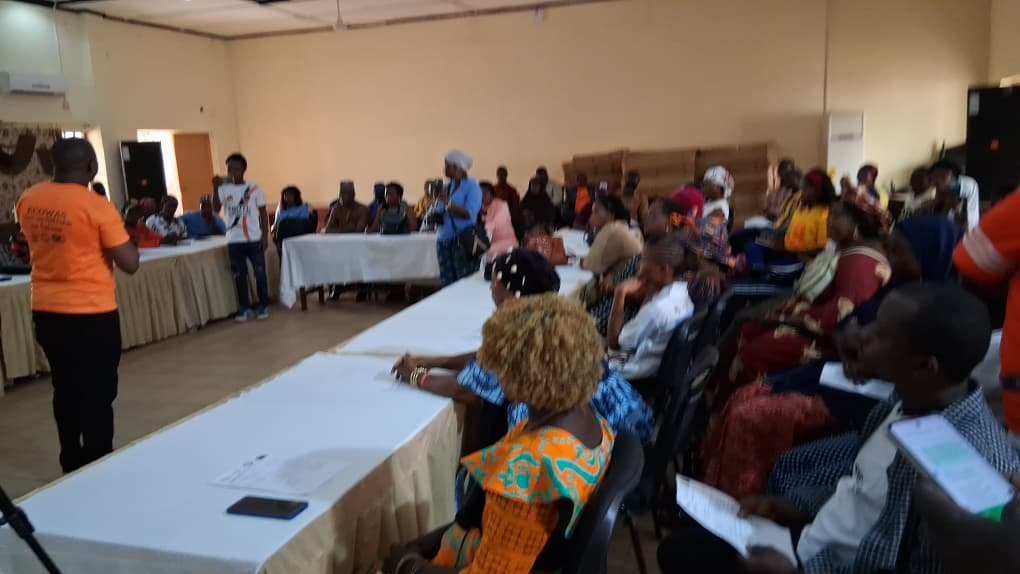
The Forum Against Harmful Practices (FAHP), from Tuesday 17th to Thursday 19th February 2026, convened a three-day dialogue in Port Loko District Council Hall, engaging traditional authorities, including paramount chiefs, soweis (initiators), religious leaders, civil society organizations, and parents. The initiative, held in collaboration with Purposeful, WAVES, and other partners, aimed to eliminate Female Genital Mutilation (FGM) by fostering dialogue on its health, human rights, and legal implications, while promoting cultural transformation toward zero tolerance.
Participants were drawn from Makeni, Tonkolili, Port Loko, and Kambia districts.
FAHP National Coordinator, Ishmael Cole, explained that the coalition’s key strategy is to promote an alternative rite of passage known as “Bondo Without Harm.” This approach preserves the cultural and social values of the Bondo society as a training ground for women, while eliminating harmful cutting. Cole emphasized that FAHP engages directly with soweis to highlight the risks of FGM, including severe health complications, trauma, and even death.
He further noted that FAHP and its partners advocate for legal reforms, lobbying traditional authorities to support enforcement of national laws and a total ban on FGM. The dialogues are designed to empower leaders to take ownership of the issue, pledging to educate their communities on the dangers of the practice and the need to abandon it.
FAHP Chairperson, Madam Rugiatu Neneh Turay, underscored that the coalition’s engagements are central to its mission of combating FGM and promoting women’s rights. She highlighted training sessions for traditional leaders on leadership, cultural preservation, and community welfare.
As a result, many soweis made public declarations to end FGM, symbolically “dropping the knife” in Bondo practices. Turay also revealed that FAHP and its partners are working to replace the traditional “Bondo bush” initiation sites with modern infrastructure such as schools, thereby improving education and reducing the impacts of FGM.
She stressed that these initiatives safeguard the rights of women and girls while preserving cultural values in a positive, modern context, aligning traditional leadership with national laws and international standards on child protection and gender equality.
Major religious leaders and scholars, including Rev. Christopher A. Turay and Alhaji Mohamed Kabba, declared during the workshops that FGM is not a religious requirement and constitutes a violation of human rights.
Speakers from Bureh and Kafu Bulum Chiefdoms, including soweis Sampa Gbla, Lulu Sankoh, Yakadiatu Fofanah, and Ya Koloneh, made inspiring commitments, pledging never to return to the practice.