

By: Saidu Jalloh
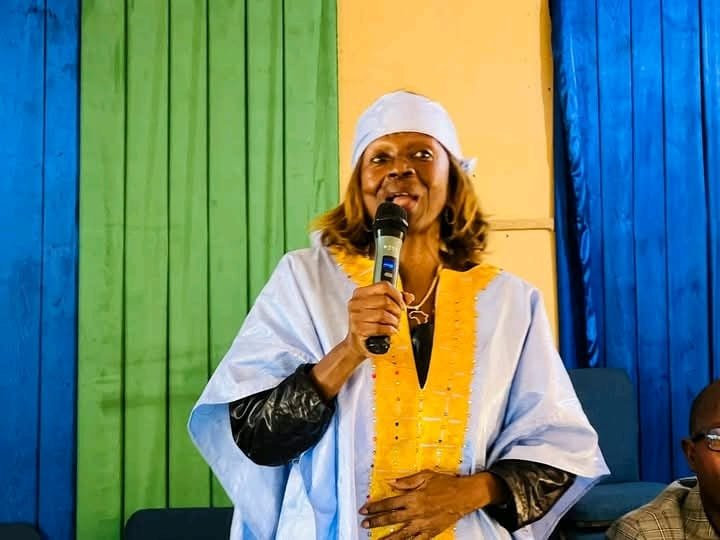
To outlining shift to people-centered development, the Minister of Planning and Economic Development, Madam Kenyeh Barlay, officially launched the ECOWAS Stakeholder Sensitization Campaign on ECOWAS Interventions in Sierra Leone on Monday in Kambia, emphasizing the regional bloc’s transition toward people-centered development.
The campaign, organized by the ECOWAS National Office as part of activities marking ECOWAS’ 50th anniversary, is being rolled out across district headquarters to raise public awareness of the organization’s vision, achievements, and ongoing interventions in member states.
Minister Barlay led the engagement alongside ECOWAS Resident Representative to Sierra Leone, H.E. Ambassador John Azumah, with participation from the National Early Warning and Response Mechanism Centre (NEWRMC) and the Ministry of Trade and Industry.
Addressing stakeholders from government institutions, local authorities, the security sector, civil society, youth and women’s groups, and the media, Minister Barlay noted that ECOWAS has evolved from an “ECOWAS of States” to an “ECOWAS of People,” with increased focus on community engagement, peace, and inclusive development. She emphasized that close collaboration with the ECOWAS National Office, hosted by the Ministry of Planning and Economic Development, is essential for the bloc’s visibility and effectiveness.
The Minister highlighted ECOWAS Vision 2050, which prioritizes peace, security, good governance, regional integration, and sustainable development, aligning closely with Sierra Leone’s Medium-Term National Development Plan and the government’s Big Five Game Changers. She also underscored President Dr. Julius Maada Bio’s role as Chair of the ECOWAS Authority of Heads of State and Government, noting his priorities in restoring constitutional order, strengthening regional security, advancing economic integration, and reforming ECOWAS institutions.
Madam Barlay cited Sierra Leone’s hosting of the ECOWAS Logistics Depot at Lungi and preparations to host an ECOWAS Heads of State Summit as indicators of the country’s growing leadership within the sub-region.
Welcoming participants, Assistant District Officer Momoh Fofanah thanked the Ministry and ECOWAS for choosing Kambia and reaffirmed the district’s commitment to sustaining peace and development through collaboration with national and regional institutions.
Ambassador Azumah traced ECOWAS’ evolution since its establishment in 1975, highlighting its expanded mandate in peacebuilding, governance, trade integration, free movement of persons, infrastructure, energy, humanitarian response, and early warning systems, in line with the African Union’s Agenda 2063 and the UN Sustainable Development Goals.
On trade integration, Assistant Director at the Ministry of Trade and Industry, Mr. Jim B. Kosseh, reaffirmed Sierra Leone’s commitment to ECOWAS trade protocols, particularly the ECOWAS Trade Liberalisation Scheme (ETLS), which promotes the free movement of goods by removing customs duties and non-tariff barriers among member states.
Technical presentations were delivered by Dr. Robert Moikowa, Deputy Development Secretary, and Mr. Komba Momoh, Head of the ECOWAS National Office. Dr. Moikowa highlighted ECOWAS’ role in regional peace and post-conflict recovery, including its contribution to ending Sierra Leone’s civil war, while Mr. Momoh outlined ongoing interventions, including the ECOWAS Logistics Depot at Lungi, plans for a Joint Border Post at Jendema, and support through the ECOWAS Volunteer Programme.
Lt. Col. Musa Fuad Kanneh of ECOWARN-SL stated that Sierra Leone’s early warning office is fully integrated into the regional system, monitoring threats including crime, insecurity, and environmental hazards.
During discussions, participants raised concerns about youth unemployment, drug abuse (particularly kush), disability inclusion, and the need for stronger grassroots engagement. Youth leader Mariatu Tarawally called for greater ECOWAS support for fair elections, stable trade systems, and rehabilitation programmes for affected youth.
Closing the event, Mr. Momoh assured stakeholders of continued engagement, reaffirming ECOWAS’ commitment to inclusive development, peace, and regional integration. The sensitization campaign is expected to continue in Koinadugu, Tonkolili, and Kono districts.