

By: Mohamed Sahr
The National Petroleum Regulatory Agency (NPRA) has announced a slight adjustment in fuel prices, raising the ceiling from Le27.4 to Le28.5 per litre, an increase of just Le1.1, in response to recent market developments and to protect consumers from sudden price shocks.
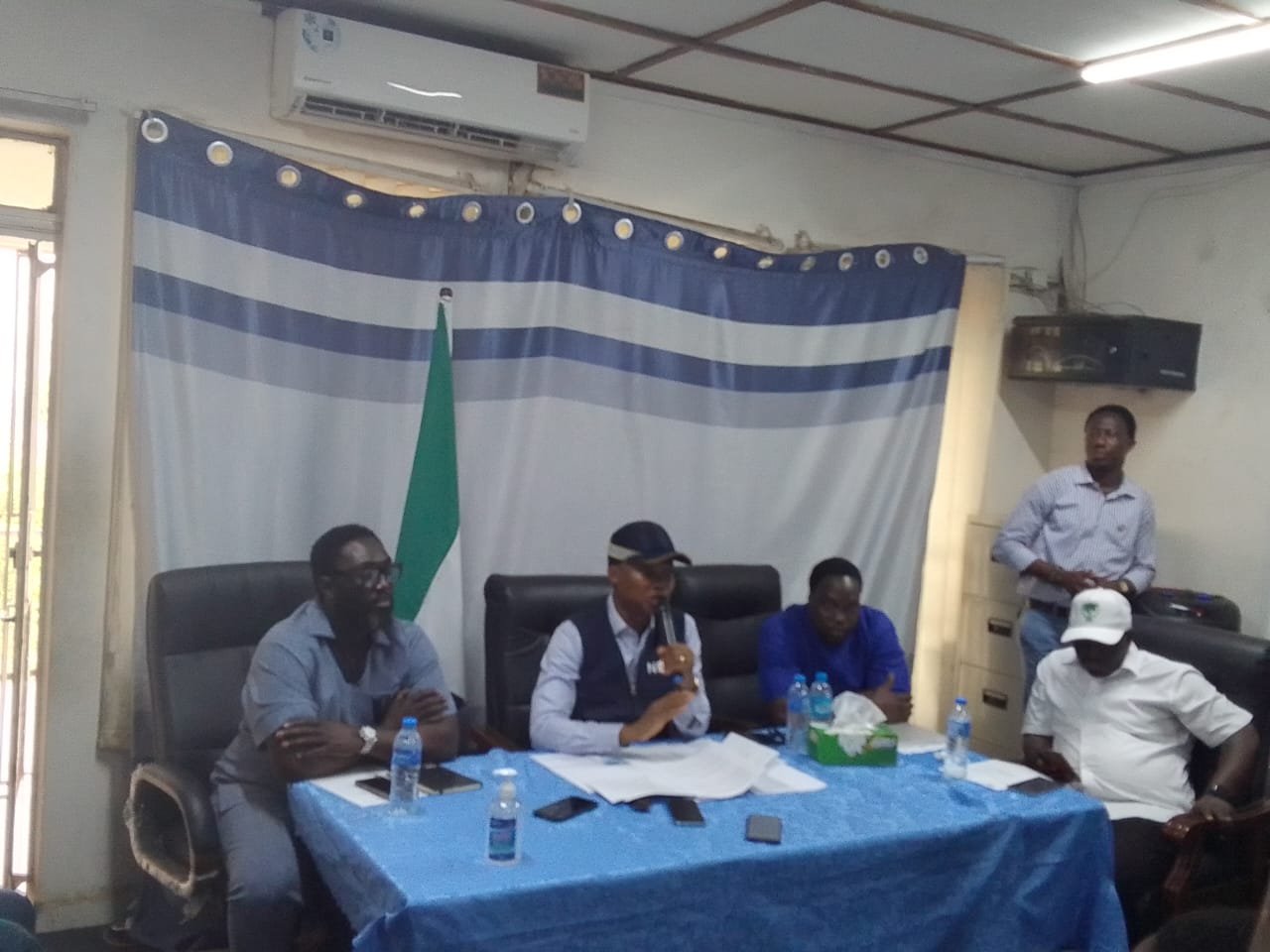
Addressing journalists at a press conference held on 28th January 202 in Freetown, NPRA Executive Director Brima Baluwa Koroma said the decision followed extensive consultations at State House with the Chief Minister, senior government officials, and key industry stakeholders amid public concern over sudden price movements at filling stations.
Koroma emphasized that the adjustment is modest and responsible, designed to reflect prevailing market realities while avoiding undue hardship on consumers. “The price has moved from Le27.4 to Le28.5 that is an increase of Le1.1,” he noted, adding that fuel prices are influenced by global market forces and exchange rate fluctuations and cannot be permanently fixed by any government.
He explained that, as a fuel-importing country, Sierra Leone is particularly exposed to international oil price changes and foreign exchange dynamics, since importers pay in foreign currency while sales are made in local currency. These factors inevitably affect domestic pump prices.
The NPRA Executive Director reminded the public that the last official price review was conducted in March 2025, when the ceiling was set at Le27.4 per litre for both diesel and petrol. Operators are prohibited from selling above the approved ceiling, though they may sell below it depends on individual cost structures.
Koroma noted that market data from recent months showed several operators selling fuel between Le22 and Le25 per litre, well below the ceiling. However, the NPRA observed that multiple operators suddenly sold fuel at the ceiling price simultaneously, raising concerns about potential coordinated pricing, which the regulator is mandated to investigate.
Citing Part Six, Section 54(1) of the NPRA Act, Koroma warned that cartelization and monopolistic practices are prohibited. “Capitalization, as defined in the Act, refers to any agreement or concerted action by refiners, importers, or retailers to fix prices,” he stressed, adding that the NPRA will act decisively if evidence of such practices is found.
Koroma highlighted the government’s commitment to transparency and dialogue, noting that the petroleum sector is sensitive due to its impact on households, businesses, and national revenue, which contributes 10-12% annually. He also outlined reforms to liberalize and strengthen the sector, including increasing market players from two major operators to nine or ten importers, and improving competition and supply security.
According to NPRA, these importers source petroleum products from countries including Spain, France, Senegal, Ghana, and Togo, reducing dependency on a single supply route and enhancing resilience in the sector.
While some neighboring countries like Nigeria and Ghana have largely deregulated their petroleum markets, Koroma explained that Sierra Leone remains in a transitional phase, with government oversight necessary to protect consumers from extreme volatility. “No responsible government will allow prices to jump overnight from the low twenties to Le28.5 without proper review and explanation,” he said.
He concluded by urging fuel operators to justify their pricing decisions to the regulator and the public, assuring that the NPRA will continue monitoring the market to ensure fairness, transparency, and compliance with the law.