

By: Audrey Raymonda John
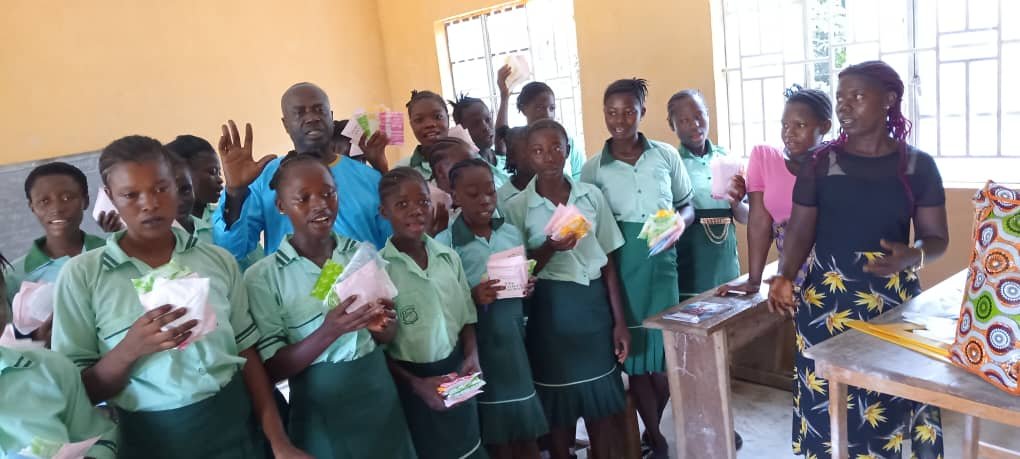
Access to menstrual hygiene is increasingly recognized not only as a health concern but also as a significant barrier to education for many girls in Sierra Leone. In response to this challenge, Mr. Jacob Sax Conteh, Proprietor of Patifu Mawaya Academy, has donated over 100 eco-friendly menstrual hygiene packs to schoolgirls to help ensure uninterrupted school attendance and academic success.
Studies indicate that girls in Sierra Leone miss up to 20 percent of school days due to the lack of menstrual hygiene materials, a situation that is even more pronounced in rural communities where disposable sanitary pads are often unaffordable or unavailable. This persistent absenteeism contributes to poor academic performance and increased dropout rates among adolescent girls.
Speaking during the donation ceremony on Wednesday, 15 January 2026, Mr. Conteh emphasized that menstrual hygiene support is essential to human capital development.
“Girls should not miss school because of something natural,” he said. “Our aim is to empower them, boost their confidence, and help break the stigma surrounding menstruation.”
The donation, carried out in partnership with a United States-based humanitarian organization, included both reusable and disposable sanitary pads designed to be safe, eco-friendly, and sustainable. In addition, teachers at the school facilitated menstrual health discussions, encouraging girls to view menstruation as a normal biological process rather than a source of shame.
Welcoming the initiative, School Principal Mr. Albert Joshua noted that many students, particularly in rural areas, face serious financial and logistical challenges in managing their menstrual health.
“This support is timely and critical. It directly affects attendance, academic performance, and the overall well-being of our students,” he said.
Beneficiary students also expressed appreciation for the intervention. One recipient, Mariatu Kamara, said the donation has eased her fears about attending school during her menstrual cycle.
“These pads mean I can come to school without worry. I hope more girls across the country can receive this kind of support,” she said.
Global data further highlights the urgency of such interventions, showing that girls without access to menstrual hygiene materials are up to 1.5 times more likely to miss school, reinforcing cycles of poverty and gender inequality.
Mr. Conteh’s initiative demonstrates how simple, targeted interventions such as access to menstrual hygiene products can have a transformative impact on girls’ education and long-term empowerment, particularly in communities where girls’ education remains vulnerable.