

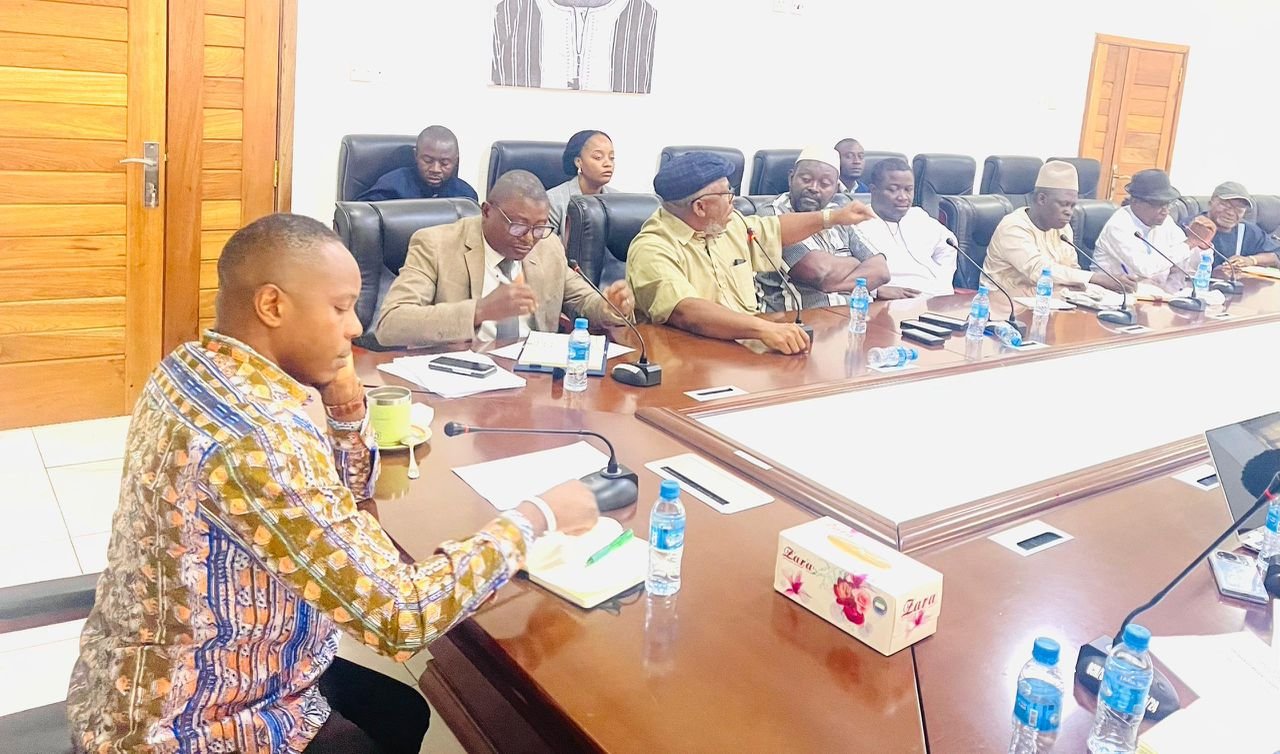
Chief Minister Dr. David Moinina Sengeh has engaged key stakeholders on critical issues affecting chieftaincy governance and local administration, including the de-amalgamation of chiefdoms, prolonged regent chieftaincies, court disputes, redistricting, and capacity building on Wednesday 15 January 2026.
In his opening remarks, Dr. Sengeh emphasized that chieftaincy and local governance issues regularly feature in National Security Council meetings and presidential briefings, highlighting their national significance. He noted that recent de-amalgamation processes have generated tensions, particularly around land ownership, boundaries, and relations among neighboring paramount chiefs. Stressing the custodial role of paramount chiefs over land, culture, and community life, he called for dialogue-based solutions and clearer procedures to address prolonged regent chieftaincies and chieftaincy-related court cases.
Speaking on behalf of traditional leaders, the Chairman of the Council of Paramount Chiefs, P.C. Fasuluku Sonsiamas III, welcomed the engagement and reaffirmed the Council’s commitment to peaceful collaboration with the Government to strengthen traditional governance and resolve chieftaincy-related challenges.
The meeting also featured a presentation by the Director of Local Government, Brima Newman Combey, who outlined the Government’s Redistricting Exercise as a key pillar of the decentralization and governance reform agenda. He explained that Cabinet has approved the redrawing of district and chiefdom boundaries, the creation of new localities in the Western Area, the continuation of chiefdom de-amalgamation, and a nationwide consultative process, culminating in a comprehensive Redistricting Report.
Key outcomes of the redistricting include the establishment of five local councils in the Western Area and the creation of Kpanguima and Bandajuma Districts, aimed at improving service delivery, governance reach, representation, and development coordination in underserved areas.
The engagement reinforces peace, strengthens traditional governance, and advances effective decentralization, directly supporting the Big Five Game Changers by bringing governance closer to the people and enhancing service delivery nationwide.