

By: Fatmata Grace Okekearu – Bo City
In a renewed demonstration of the Government of Sierra Leone’s commitment to protecting the nation’s human capital, a total of forty-two (42) Kush Ambassadors were on Monday in January 2026 successfully discharged from the Kush Rehabilitation Centre in Gondama, Bo District, after completing a structured 55-day recovery programme aimed at addressing kush dependency and related substance abuse.
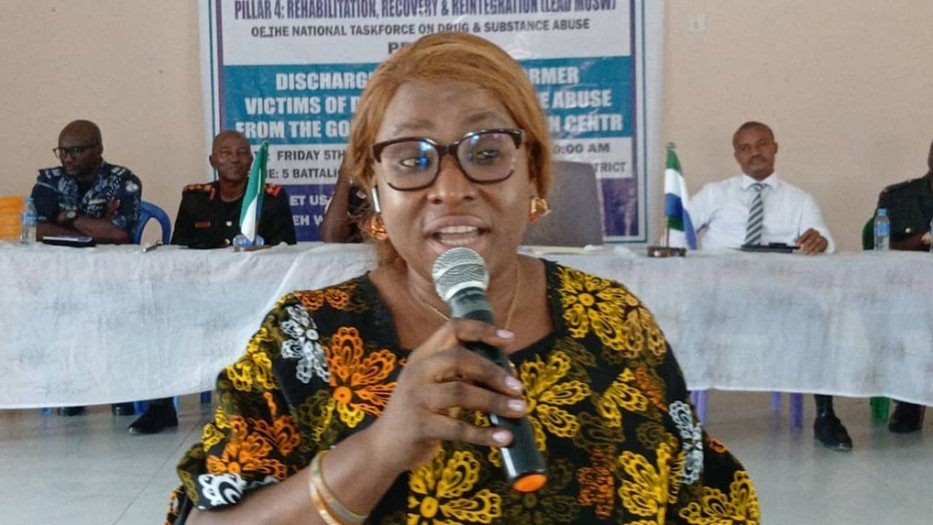
The discharge ceremony, held at the 5 Infantry Brigade Multipurpose Hall, attracted local authorities, health professionals, military personnel, officers of the Sierra Leone Police, parents, and other community stakeholders. The event underscored the Government’s resolve to rehabilitate, recover, and reintegrate individuals affected by drug and substance abuse, while celebrating the resilience and commitment demonstrated by the ambassadors throughout the rehabilitation process.
The discharged group represents the second batch under the national rehabilitation initiative, reinforcing Pillar Four of the National Taskforce on Drug and Substance Abuse, which focuses on rehabilitation, recovery, and reintegration. The implementation of this pillar is being led by the Ministry of Social Welfare.
Of the 42 ambassadors discharged, three (3) were females, while fourteen (14) were university students. All beneficiaries underwent intensive detoxification and psychosocial treatment designed to restore their physical, mental, and social well-being and prepare them for productive reintegration into society.
Speaking at the ceremony, the Bo District Medical Officer, Dr. Stevens Amara Ngegbai, emphasized the urgent need for strong community ownership in combating drug and substance abuse. He described drugs as a serious menace capable of destroying the youth population, which constitutes the backbone of the nation’s future.
Dr. Ngegbai cautioned the ambassadors against relapse, stressing that kush has severe biological, psychological, and social consequences. He explained that the rehabilitation programme adopted a bio-psychosocial model that provides holistic support to recovery. He warned that returning to kush use could compromise the immune system, with potentially fatal consequences.
Also addressing the gathering, the Brigade Commander of the 5 Infantry Brigade, Brigadier A. O. Koroma, said President Julius Maada Bio’s decisive action against kush reflects his fatherly concern for the future of the nation. He noted that persistent appeals from parents and communities prompted the President to translate concern into concrete action aimed at saving young people from drug addiction.
Brigadier Koroma further stated that efforts to disrupt the drug supply chain have significantly strengthened the fight against substance abuse nationwide. Reflecting on the past, he observed that drug threats were minimal during his youth, with marijuana being the most commonly known substance. He strongly advised the discharged ambassadors to completely abstain from drugs and other harmful substances.
Delivering the keynote address, the Minister of Social Welfare, Madam Melrose Kaminty, urged the ambassadors and their parents to become the change agents society desires. She warned that any attempt to return to kush use could result in dire consequences, including death.
Madam Kaminty disclosed that the rehabilitation initiative places a heavy financial and logistical burden on the government, underscoring the seriousness with which addiction is being addressed. She described drug addiction as a complex societal challenge that requires deliberate and strategic interventions to heal affected individuals.
The Minister explained that removing individuals from harmful environments to safer spaces for detoxification remains a critical part of the recovery process. She encouraged the ambassadors to consider themselves fortunate beneficiaries of the programme and to uphold their ambassadorial roles responsibly by promoting positive change within their communities.
She reminded them that many had previously been rejected by society due to destructive behaviours linked to addiction, stressing that their return must now reflect genuine transformation through sober and responsible living.
Concluding her address, Madam Kaminty appealed to parents to embrace their children, noting that community confidence and hope are restored when families stand firmly with rehabilitated members. She called on parents to act as “senior counsellors”, guiding their children towards realizing their full potential.
The Minister assured that reintegration is the next phase of the programme, adding that her ministry will collaborate with relevant ministries, departments, and agencies to ensure that pupils and students return to school and university. Those not enrolled in formal education, she said, will be supported with skills training and vocational opportunities to improve their livelihoods and positively transform societal perceptions.