By: Aminata Sesay
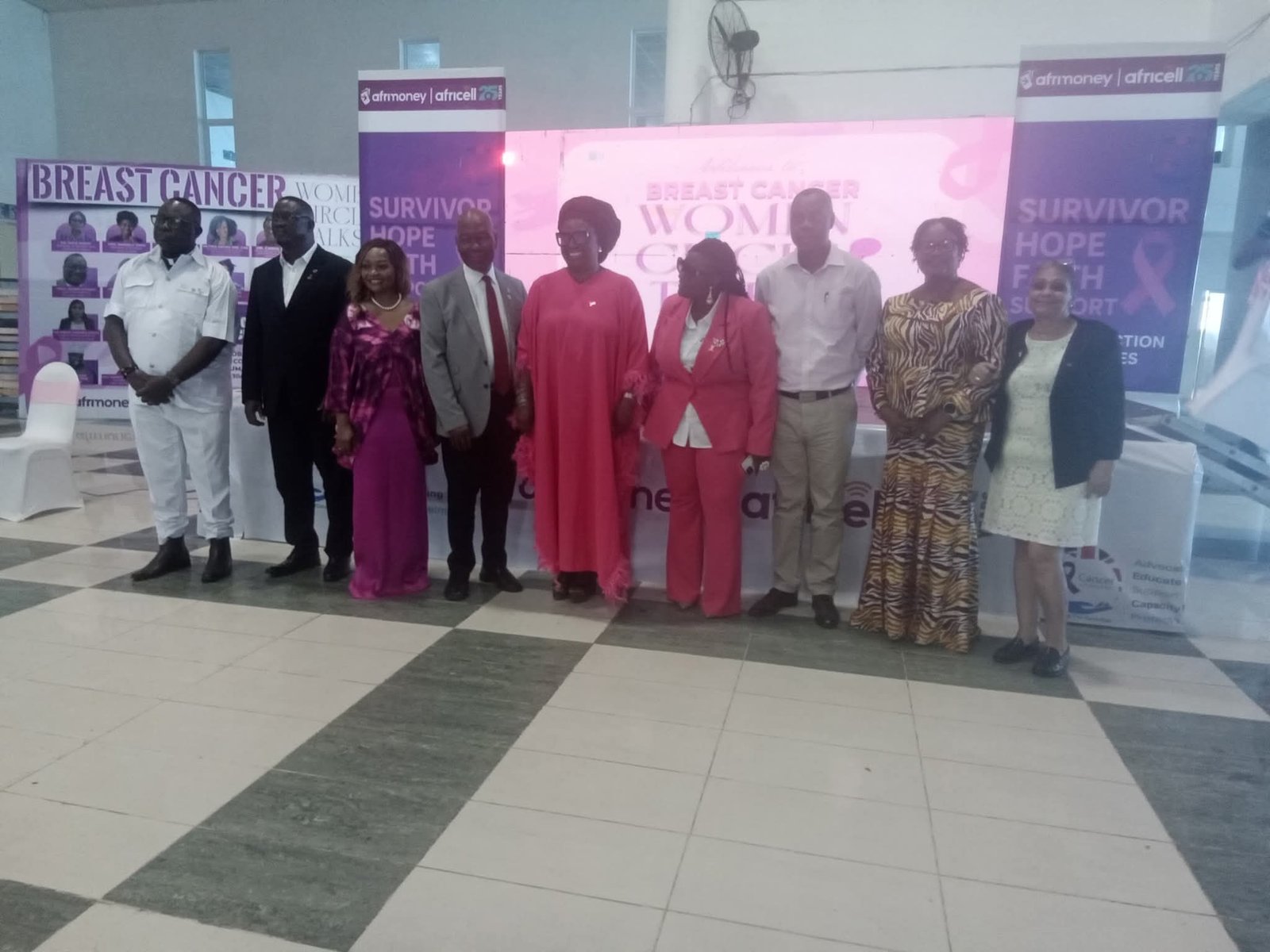
At the Breast Cancer Women’s Survivorship Ceremony in Freetown, health professionals and advocates gathered to send a powerful message: Sierra Leone’s battle against breast cancer must go beyond treatment it must focus on early detection, education, and holistic care.
Dr. Len Gordon Harris, a consultant radiologist and trustee of Cancer UK-Salone, opened the discussions with a stark reality check on the state of breast cancer diagnosis in the country.
“Early detection remains a major challenge,” he said. “In Sierra Leone, we rarely see patients at the early stages of cancer. By the time most arrive, the disease has already advanced.”
Dr. Harris emphasized that an effective early-detection system relies on widespread access to diagnostic tools like mammograms and ultrasounds—resources that remain limited in many parts of the country.
“A lump does not always mean cancer,” he cautioned. “And not having a lump doesn’t guarantee you’re cancer-free. That’s why regular screening is so important.”
He encouraged women to take advantage of free mammogram services, such as those offered by the Well Woman Clinic every October, urging that prompt action could make the difference between life and death.
Drawing on decades of medical experience, Dr. Harris highlighted that modern cancer care goes beyond just physical treatment.
“We now understand breast cancer as a systemic disease that requires a holistic approach addressing the physical, emotional, and social well-being of patients,” he said.
Prof. Babatunde Duduyemi, a pathologist and honorary patron of Cancer UK-Salone, echoed this sentiment, speaking on the importance of proper diagnosis and laboratory confirmation.
“In our lab, out of nearly 1,500 breast lumps examined in the past five years, less than 30% were cancerous,” he revealed. “So it’s important not to panic. Only laboratory analysis can confirm the truth.”
He also warned against the dangerous practice of discarding removed tissue without proper examination.
“Every lump removed must be tested,” he urged. “Throwing it away denies patients the chance of an early and accurate diagnosis. Some of the deaths we see today could have been prevented if that first lump had been tested.”
Prof. Duduyemi shared positive stories of recovery, reinforcing that breast cancer is no longer a death sentence.
“Cancer can be defeated right here in Sierra Leone,” he said. “We have survivors living proof that early diagnosis works.”
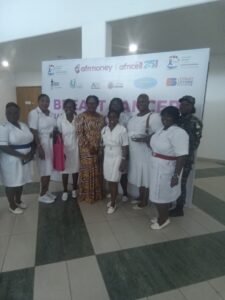
Adding a compassionate voice to the medical discourse, Dr. Patricia Mattu Bah, Chief Nursing Officer at the Ministry of Health, praised the dedication of nurses who stand by patients throughout every stage of their journey.
“Nurses are often the first to see the patient, the first to listen, and the first to comfort,” she said. “We are not just caregivers we are companions in their fight for life.”
Dr. Bah called for greater investment in oncology nursing, emphasizing that specialized care is essential to meet the growing cancer care needs.
“Every profession has its specialty,” she noted. “We need more trained oncology nurses to support patients physically, emotionally, and psychologically.”
She described nursing care as both an act of empathy and skill.
“Sometimes, what a patient needs most is not medicine it’s hope,” she said. “We must be there to reassure them that cancer is not the end of life.”
As the event concluded, participants reaffirmed their commitment to a future where cancer care in Sierra Leone is defined not by fear, but by awareness, compassion, and collaboration.
Through sustained advocacy, improved diagnostic services, and professional training, organizations like Cancer UK-Salone aim to transform the narrative from one of despair to one of courage and recovery.
“Cancer,” Dr. Bah concluded, “is not just a diagnosis it’s a call to stand together, to care deeply, and to believe in healing.