

By: Aminata Sesay
Sierra Leone is approaching a major milestone in its digital transformation journey with the near-complete rollout of the Electronic Government Procurement (e-GP) system. Far beyond a simple upgrade in procurement processes, the e-GP project is a cornerstone of the country’s broader strategy to modernize public sector operations, enhance service delivery, and promote transparency through technology.
Led by the National Public Procurement Authority (NPPA), in partnership with Perago Systems–IT Warehouse (JV), the initiative is designed to eliminate the inefficiencies, opacity, and manual bottlenecks that have long hampered public procurement. The digital platform will manage the entire procurement lifecycle from planning and budgeting to contract awards and reporting aligning Sierra Leone with global best practices, including the Open Contracting Data Standard (OCDS).
“This is a transformation of how government does business,” said an NPPA official. “With e-GP, we are not only improving procurement; we are building a smarter, faster, and more accountable public sector.”
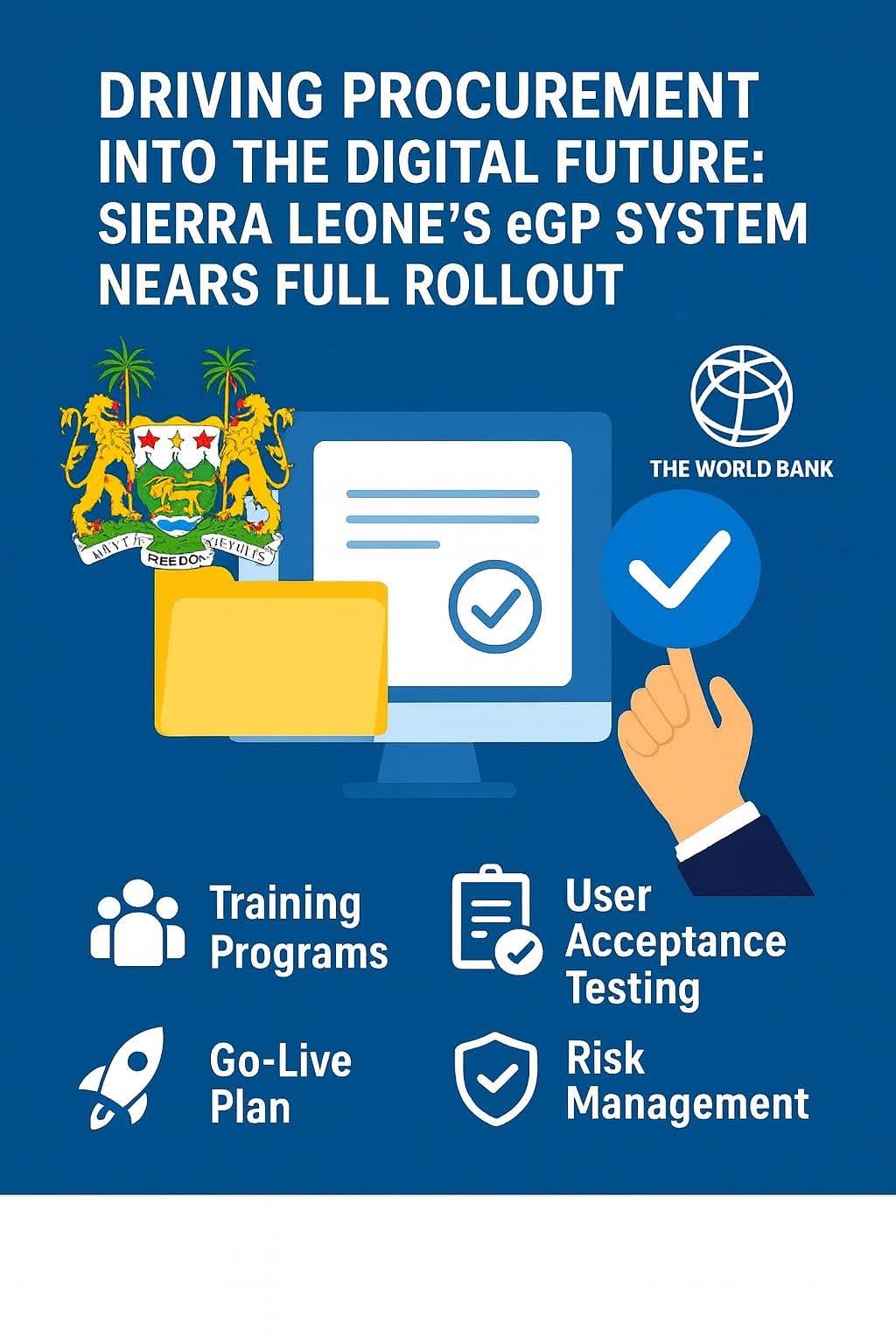
A strong focus on capacity building is central to the rollout. A comprehensive Training of Trainers (ToT) program is empowering NPPA personnel to become system champions, enabling them to deliver nationwide training and ongoing user support.
Simultaneously, selected pilot Ministries, Departments, and Agencies (MDAs) are undergoing specialized, hands-on training across all system modules covering supplier registration, procurement planning, bidding, evaluation, contract management, and compliance. This ensures users are not only familiar with the system but also able to apply it effectively in real-world procurement scenarios.
A critical component of the rollout is the User Acceptance Testing (UAT) phase. This rigorous stage validates that the e-GP platform meets all technical and functional requirements before going live. Covering 26 core features representing 62% of total system functionality UAT simulates real procurement processes such as bid submission, evaluation workflows, contract awards, and OCDS-compliant reporting.
Although full integration with national systems like the Corporate Affairs Commission (CAC), National Revenue Authority (NRA), NASSIT, and National Civil Registration Authority (NCRA) is pending due to ongoing API development, interim solutions are in place to maintain momentum.
The Go-Live roadmap outlines a phased, strategic transition to full-scale operations. It includes interoperability workarounds, readiness assessments for MDAs, and targeted outreach to suppliers especially Small and Medium Enterprises (SMEs) to ensure widespread adoption from day one.
Supplier engagement strategies include in-person workshops, online training resources, and collaboration with industry associations to ensure inclusivity and awareness.
NPPA and its partners have adopted a proactive risk management approach. A comprehensive risk register outlines key threats ranging from data migration issues to system downtime and user resistance with tailored mitigation strategies for each.
Post-launch, a tiered support structure will be activated, featuring real-time performance monitoring, dedicated help desks, and a technical response team to ensure business continuity and user satisfaction.
The e-GP initiative stands as a blueprint for broader public sector reform. NPPA leads policy direction and operational oversight; Perago–IT Warehouse manages software delivery; and the Ministry of Finance’s Project Management Unit (PMU) handles logistical and financial coordination. Active involvement from MDAs and suppliers reinforces a culture of ownership, accountability, and transparency.
As the project enters its final stages completing training, finalizing UAT, conducting parallel procurement simulations, and performing a final readiness review it signals the dawn of a new digital era in Sierra Leone’s public procurement.
“This is not just an IT project it’s a tool for institutional reform,” said a senior government official. “e-GP is laying the digital foundation for a more open, efficient, and citizen-focused government.”