

By: Saidu Jalloh
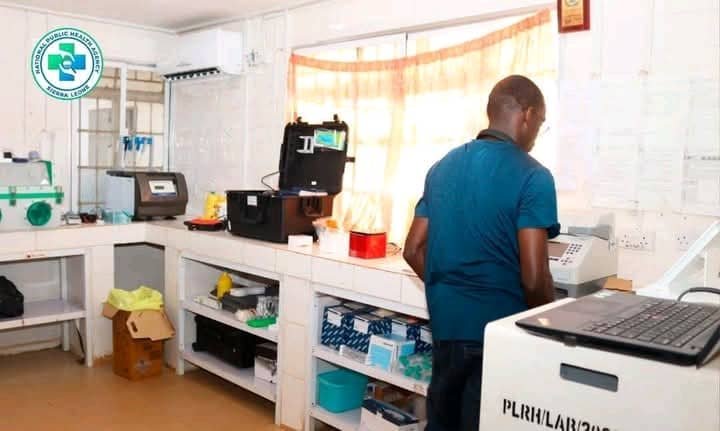
The Laboratory Pillar in Sierra Leone has exceeded its genomic sequencing target for Mpox, marking a key milestone in the country’s outbreak response. With a current sequencing coverage of 8.4% of confirmed cases above the initial 8% goal the achievement demonstrates growing national capacity to monitor viral evolution and guide public health strategies.
The team had initially aimed to sequence 70 to 90 Mpox-positive samples per month, with an average turnaround time of seven days. As of the latest update, 423 Mpox-positive samples have been sequenced out of 5,038 confirmed cases, surpassing the original target.
Breakdown of sequenced samples includes central Public Health Reference Laboratory (CPHRL): 145 sequences (2.9%), Kenema Laboratory: 103 sequences (2.0%), Institut Pasteur in Dakar: 8 sequences (0.2%) and Port Loko Mobile Laboratory: 167 sequences (3.3%).
This achievement reflects strong inter-laboratory collaboration and a well-coordinated national surveillance system.
The Laboratory Pillar’s sequencing strategy prioritizes samples with low cycle threshold (CT) values to ensure high-quality genomic data, samples from deceased patients and those with severe or atypical symptoms and samples from border districts to monitor potential cross-border transmission.
“Our sequencing strategy is designed not just for quantity but for meaningful data that can guide our understanding of the virus’s behavior and its spread across regions,” said a senior official from the Laboratory Pillar.
Experts underscore the importance of genomic sequencing in tracking the evolution of Mpox viral clades, detecting mutations of concern and informing public health decision-making on containment, treatment, and resource allocation.
National authorities and health partners have commended the Laboratory Pillar for its scientific rigor and swift response. Efforts to expand sequencing coverage and improve turnaround time are ongoing, with the team also exploring advanced sequencing technologies and new partnerships to enhance capacity.
This accomplishment not only highlights Sierra Leone’s technical capability but also serves as a model for effective coordination and resilience in addressing public health emergencies