

By: Saidu Jalloh
In a renewed show of solidarity and vision, the United Nations Population Fund (UNFPA) has reaffirmed its strategic partnership with Sierra Leone’s Ministry of Youth Affairs. The collaboration aims to uplift and empower the country’s young population through targeted interventions in skills development, entrepreneurship, health education, and civic engagement.
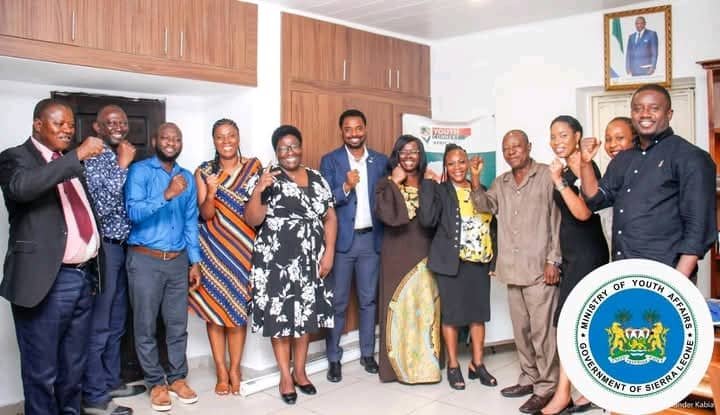
On Wednesday, a high-level UNFPA delegation paid a courtesy visit to the Minister of Youth Affairs, reinforcing a long-standing partnership dedicated to improving the lives of young people across Sierra Leone. The meeting was both symbolic and strategic highlighting a shared commitment to accelerating youth development through innovation and inclusive programming.
Discussions during the meeting centered on the urgent need for innovative solutions to youth challenges, with a focus on entrepreneurship, digital and vocational skills training and access to accurate health information and services.
With youth making up more than 60% of Sierra Leone’s population, both parties underscored that investing in young people is not just a moral obligation it is a national development priority.
“Our young people are the heartbeat of this nation. If we invest in their potential, we invest in the future of Sierra Leone,” stated the Minister of Youth Affairs.
This message resonated strongly with the UNFPA team, which expressed its continued support for inclusive, data-driven programs that directly respond to the real needs of youth.
Several pressing challenges were discussed during the engagement, including rising youth unemployment, substance abuse and mental health concerns and limited access to comprehensive sexual and reproductive health education.
UNFPA emphasized its readiness to work with the Ministry to expand outreach and services, especially in marginalized and underserved communities.
Beyond service delivery, the meeting also emphasized the importance of giving young people a seat at the table in decision-making processes. Both parties agreed that empowering youth involves more than resources it requires inclusive governance and youth-led innovation.
As the visit concluded, both institutions committed to moving from dialogue to tangible outcomes. Plans were discussed for launching joint programs, enhancing monitoring and evaluation systems, and ensuring long-term impact through localized strategies.
This renewed partnership signals more than just collaboration between two entities it marks the beginning of a national movement to build a resilient, capable, and future-ready generation.
“When youth are empowered, nations thrive,” said one official. “Together, we are poised to lead that transformation one young person at a time.”