

By: Aminata Sesay
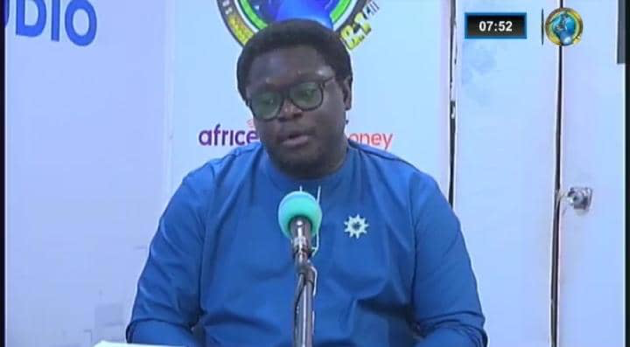
Since the launch of Sierra Leone’s flagship Free Quality Education (FQE) initiative, a total of $106 million in donor funding has been mobilized to transform the country’s education sector, according to Ambrose T. Sesay, Project Coordinator at the Free Quality Education Project Secretariat (FEPS).
In a recent interview with local media on Wednesday, April 16, 2025, Sesay revealed that this substantial investment has been provided by various international partners to support President Julius Maada Bio’s vision for accessible and improved education for all Sierra Leonean children.
He explained that the first phase of funding, which amounted to $72 million, started with $66 million in 2020 $50 million from the World Bank and $16 million from the European Union, Irish Aid, and the UK’s Foreign, Commonwealth & Development Office (FCDO). An additional $6.8 million was later secured during the height of the COVID-19 pandemic to support school health and hygiene measures, ensuring safe learning environments for students.
Further financial commitments arrived in 2023, with $20 million provided by the World Bank through the International Development Association (IDA) and $13 million from Education Above All (EAA), bringing the total funding to $106 million.
“Out of the total amount received, 79% has already been disbursed to implement various activities across the country,” Sesay noted.
While the FQE project was initially scheduled to conclude in September 2025, the additional support received has extended its lifespan to December 2027.
The project supports seven key components targeting different areas of the education sector. These include policy development, teacher training, school infrastructure, and emergency response. Among the policy achievements are the school catchment area policy, radical inclusion policy, school safety policy, and the Basic Education Act.
The Teaching Service Commission (TSC) leads the second component on teacher management and professional development. Other components focus on school-level development, project monitoring, and interventions such as the COVID-19 education response (now closed since 2022), along with a contingency fund for unforeseen disruptions to the education system.
One major initiative, Enhanced Foundational Learning and Increased Access to Education, aims to reintegrate 120,000 out-of-school children into the classroom.
Sesay also highlighted efforts to eliminate double-shift schooling in urban areas. “We’ve made significant progress in converting double-shift schools into single-shift institutions. Saint Joseph’s Convent is one notable example,” he said.
To support this transition and reduce overcrowding, the project has overseen the construction of 367 classrooms nationwide, of which 210 have already been furnished and handed over to schools. “More classrooms are complete and will be delivered soon,” Sesay confirmed.