By: Fatmata Grace Okekerue (Bo)
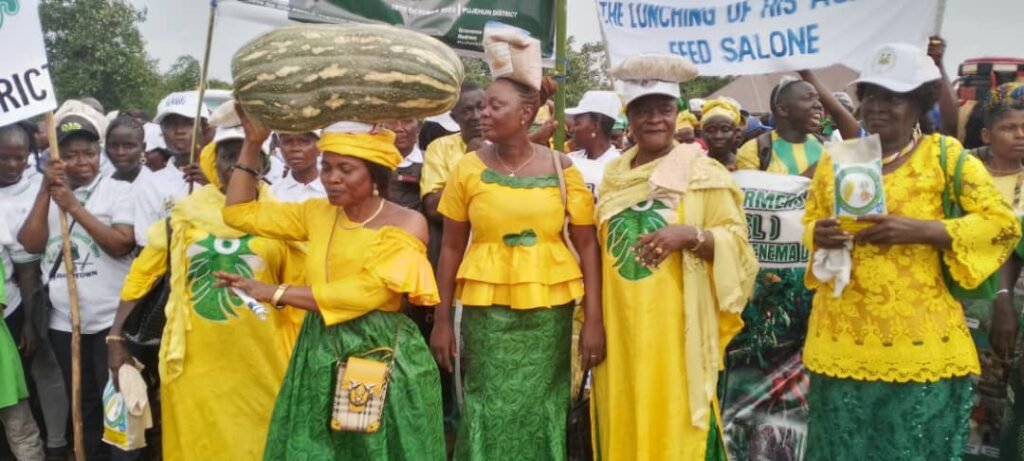
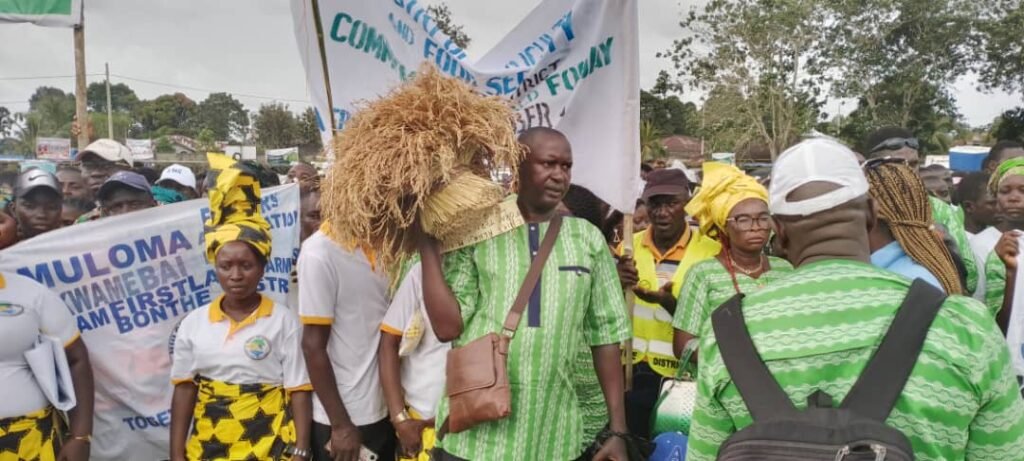
In commemoration of this year’s World Food Day, celebrated under the theme “Water is Life, Water is Food: Leave No One Behind,” President Julius Maada Bio officially inaugurated the Feed Salon Project in Pujehun District. The initiative aims to address hunger and promote sustainable agriculture in Sierra Leone.
According to a United Nations representative working with the World Food Programme, a staggering 780 million people worldwide are hungry, emphasizing the critical importance of such initiatives.
In his welcoming address, Paramount Chief Kaikai expressed concerns about ongoing challenges, including the lack of electricity despite the President’s promise, and the incomplete BandaJuma Road project. He noted that many in the community were dissatisfied with the removal of individuals who previously held positions within the government.
Paramount Chief Kaikai went on to highlight that President Bio’s engagement with traditional leaders had diminished, stressing the need for more direct dialogue on issues affecting their chiefdoms.
South Region Resident Minister Mohamed Aliue praised President Bio’s commitment to hard work and his background as a master farmer. He affirmed that the President’s election was not based on sentiment but on merit.
Yata Sama, President of the Farmer Federation, expressed her appreciation for President Bio’s recognition of farmers and women in his daily activities, acknowledging their role as primary food producers. She called upon the Ministry of Agriculture and Finance to increase financial support to farmers, emphasizing that farming is time-bound and that the President’s vision could only be realized with strong support for farmers.
Honorable Ibrahim Tawa Conteh, Chairman of the Parliamentary Oversight Committee, pointed out that President Bio’s statement on the Feed Salon Project wasn’t the first in Sierra Leone’s history. He cited a similar promise made by late President Alhaji Ahmed Kabba in 2002.
Conteh went further to elaborate on the financial implications, noting that to successfully implement the project, Sierra Leone would require a significant amount of funding, highlighting the role of commercial banks in this endeavor. He emphasized the need for research to understand why previous agricultural promises, like those of Presidents Kabba and Koroma, were not fulfilled.
The Minister of Agriculture encouraged the people of Sierra Leone to take ownership of the Feed Salon Project. He stressed the importance of producing good food, controlling food resources within the country, and utilizing natural resources to benefit the nation.
In his keynote address, President Julius Maada Bio expressed his gratitude to the people of Pujehun District for their support in electing him as President. However, he addressed the concerns raised during the welcome speeches, emphasizing that key positions within his government were awarded to Pujehun District, including the Minister of Agriculture and Government Business.
President Bio underscored the significance of this year’s World Food Day theme, highlighting Sierra Leone’s abundant natural resources and the need to utilize them effectively. He encouraged Sierra Leoneans to support local production and reduce the importation of foreign goods, citing a successful venture in producing cooking oil by a company led by Samale.
The President also urged farmers to make optimal use of the provided fertilizers, emphasizing the importance of applying them to their crops for improved yields. He proclaimed himself a Master Farmer and shared his vision of returning to farming after his retirement.
In a formal ceremony, President Julius Maada Bio launched the Feed Salon Project, signifying his commitment to addressing hunger, promoting agricultural sustainability, and harnessing Sierra Leone’s natural resources for economic growth.
The Feed Salon Project, initiated on World Food Day, is set to be a catalyst for positive change in Sierra Leone’s agricultural landscape, fostering self-sufficiency, and reducing food scarcity while emphasizing the vital role of water in the process.