By: Mohamed M. Sesay
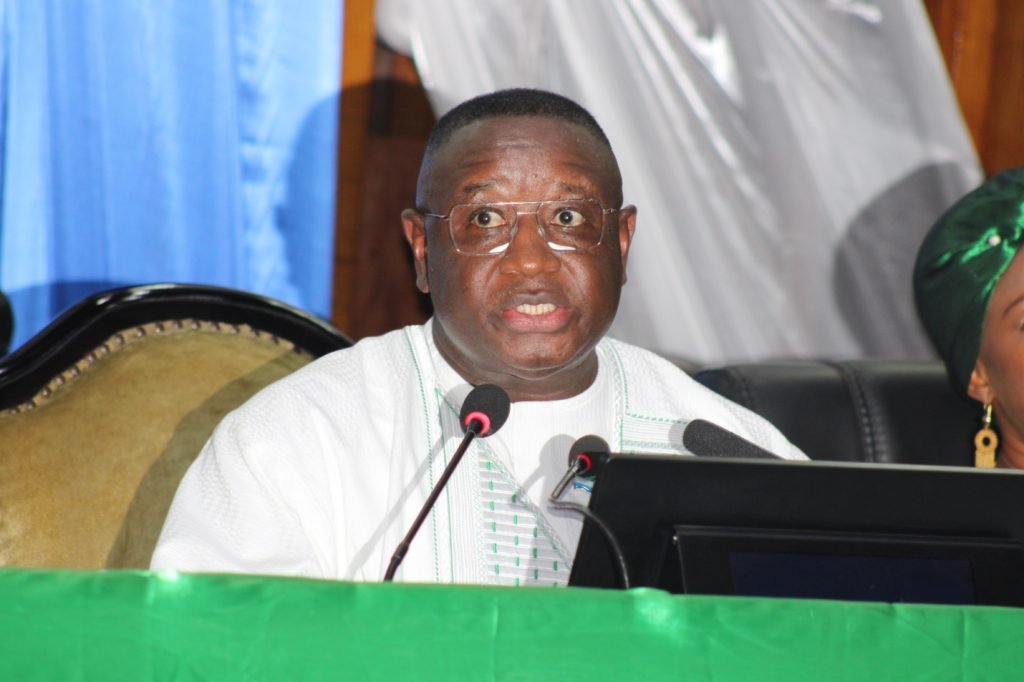
At the official dissolution of the Fifth Parliament of the Second Republic of Sierra Leone, His Excellency President Julius Maada Bio has on the 25th of April 2023, assured the nation that he would serve the Sixth Parliament of the Second Republic of Sierra Leone with a renewed vigor after he would have won the June 24th 2023 election.
Addressing Members of Parliament, President Bio said leading the country is the greatest service any citizen can be entrusted with. He added that it has been a privilege to lead Sierra Leone, albeit in unprecedented and turbulent economic times. He said his Party, the great SLPP, and him are committed to serving with renewed vigor in the next Parliament, and also excited about a future of new possibilities and hope for the nation.
President Bio edified that amidst the unprecedented global headwinds causing economic disruptions since 2020, the country’s investment in education increased from under 15% in 2018 to 22% of the annual budgetary allocation to support primary, secondary, higher, technical and vocational education and training.
He furthered that Sierra Leone’s global standing for promoting universal access to education was highlighted when he co-chaired the global Transforming Education Summit with the UN Secretary-General António Guterres in 2022 and made one of the Global Champions for Foundational Learning through the 2022-2026 Partnership Compact with the Global Partnership for Education (GPE).
He continued that the investment in education had enabled his government to support over 80% of schools with Government subsidies, recruit over 12,000 new teachers and train double that number. At the same time, he said his government had added around 1 million new learners and recruited over 300 education monitoring officers (up from 13 officers in 2018).
“Additionally, we have provided school feeding for over 600,000 learners, projected to 800,000 by the extension to the Western Area”, he said.
President Bio also reminded that his SLPP Administration had increased teachers’ salaries throughout the five years including an increase of 10% for junior teachers in 2019 as transportation allowance; a 30% salary increase in 2020 for all teachers; a 45% increase in teachers’ salaries for the next three years, 2023 to 2025 academic year; and an increase of staff wages by 75% of tertiary education institutions.
Highlighting the gains his government had made in the healthcare delivery, President Bio disclosed that improving the health of this nation is another primary focus of his Government’s human capital development agenda. He added that iIt should be no surprise then that his government’s investments in healthcare are unprecedented.
President Bio also reminded that his Government had increased its annual budgetary allocation to healthcare from 6% in 2018 to 11.6% in 2021. He said they had constructed or rehabilitated 200 more healthcare facilities, supported the specialist training of our doctors in country, and recruited and trained over 5,000 more pin-coded staff and an additional 8,700 Community Health Workers recruited (a 50% increase since 2018). Additionally, he said his government had rolled out the hospital-on-wheels project that serves over 20,000 patients in 12 districts and installed four dialysis stations for treating over 700 patients, and introduced cervical cancer screening at 8 health facilities.
“Due to these and many more investments in healthcare, we have made great progress on many health indicators in the last five years. Within our region, Sierra Leone is performing well on several key indicators”, he said
Placing emphasis on agriculture in his next government, President Bio assured Members of Parliament that his Government is particularly concerned by the increase in food insecurity that so many citizens face. He said Investing more smartly in the agriculture sector thus remains a core priority to address this challenge. As Sierra Leoneans, he said the country is blessed with fertile land with great potential to produce more than enough food to meet their needs.
President Bio intimated that his working visit to Vietnam last year was an eye-opener that provided a vivid example of the challenge and opportunities before them. He said the agricultural similarities between the two nations are clear.
He continued that Vietnam and Sierra Leone have more than 5 million hectares of arable land and receive more than five months of heavy rainfall. He added that Vietnam uses that to produce 44 million metric tonnes of rice and is a net rice exporter.
“This must change. We must put more seeds into our fertile soil and raise more livestock and poultry. Only by improving our local food production can we cushion the effects of global disruptions on our food prices, ensure food self-sufficiency, and transform our economy”, he assured Members of Parliament.