

February 1, 2022
By: NaCSA IEC Team
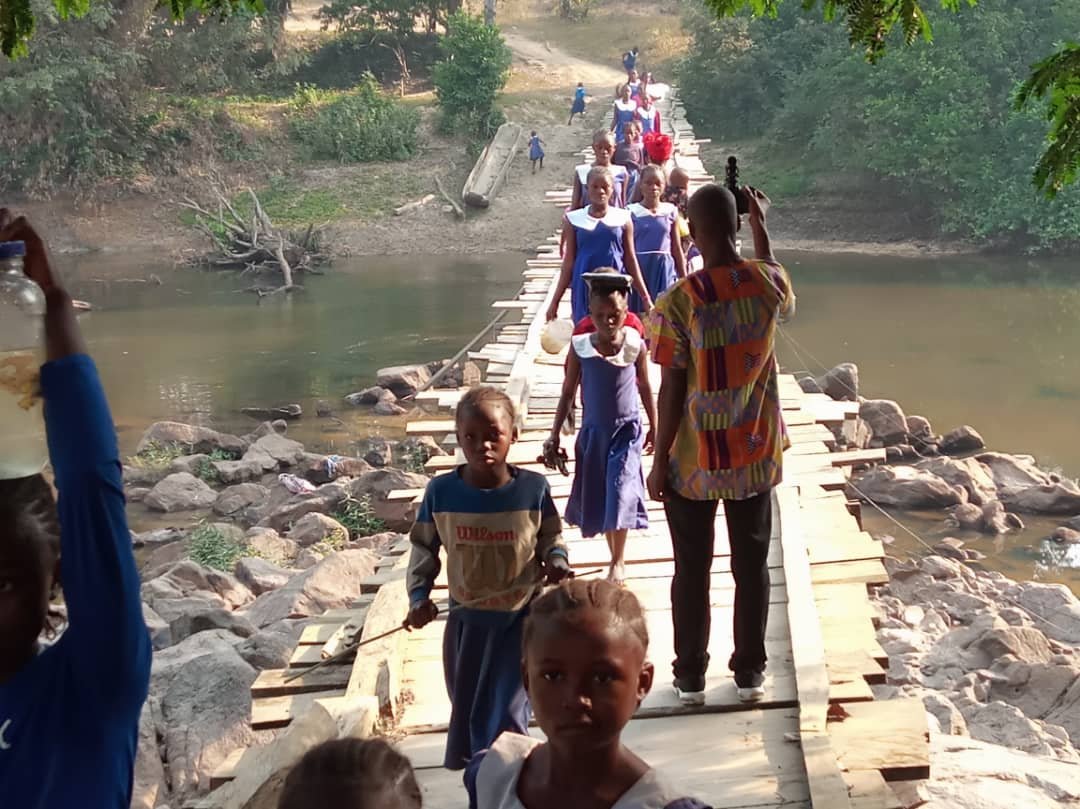
The National Commission for Social Action (NaCSA) through its Pro Poor-Growth for Peace Consolidation Project (GPC) has on Friday, January 28, 2022 held a public disclosure engagement meeting with stakeholders of the three (3) beneficiary chiefdoms ahead of the construction of two (2) masterpiece bridges between Yardu Junction – Gbamandu road (64.9 meters span) in Gbense chiefdom and Tombodu – Yardu (43.2 meters span) in Sandor and Kamaran chiefdoms, Kono district.
In her Keynote address while representing the Commissioner of NaCSA, the NaCSA Director of Field Operations, Md. Catherine Sillah described NaCSA as the government development agency translating government’s promises into actual development interventions. These bridges, she noted are examples of government’s initiatives to open up Kono district and to improve the lives of its people. “This is so, as the government of President Bio believes that Kono district is equally so important. The Director of Field Operations affirmed that, it is the outcome of the meeting that would determine whether or not the work will commence or be transferred elsewhere. Md. Sillah joined the other speakers to appeal to the stakeholders and community members to own the project and avail the necessary support that the would-be contractors may need.
Salifu Mansaray, the Programme Manager for the GPC project reiterated the commitment of the Government of Sierra Leone and the German Government in bringing an inclusive community development. He noted that the public disclosure meeting is to present the Environmental Social and Health Impact Assessment (ESHIA) report to the community people.
“The main objective for carrying out an Environmental Social and Health Impact Assessment (ESHIA) is to assess, predict, and analyze the possible beneficial and adverse environmental and social risks and impacts anticipated during the construction, decommissioning and operational phases of the construction of two mega bridges in Kono district”.
Consultant Ing. Patrick J. Lavalie noted that the public disclosure is to scrutinize the ESHIA is it predict, evaluate and propose workable measures to avoid, minimize or compensate for adverse impacts while enhancing the beneficial ones. This platform create room for public participation in decision making regarding the project through consultation and engagement and to aid the preparation of the Environmental and Social Management Plan (ESMP) in compliance with EPA-SL Act 2008 as amended in 2010. He further confirmed that consultations for the proposed bridge were carried out with key informants including the Local Authorities (District Council, Chiefs, etc.) and focus group discussion with residents along the road corridor (farmers, land owners and traders etc.).
Describing the construction of the two mega structures, the Chairman of the Kono District Council, Solomon Sahr Gbondo revealed that the project is the biggest single donor funded intervention ever in the history of the district. The three chiefdoms benefiting from the intervention in the district are Gbense, Sandor and Kamaran. To them, the construction project will redefine the socio-economic status of their once isolated communities. Chief J. O Sourie, the Speaker of Sandor Chiefdom spoke on the strategic location of his chiefdom, which he noted gives the chiefdom comparative advantage to others. Chief Sourie revealed that, only two out of the nine sections in Sandor chiefdom do mining while the rest depend on farming for their livelihoods. The bridge, he noted when completed would not only open up the chiefdom but could link the farmers to the markets thereby making farming a profitable enterprise to his people. He further pledged their unshaken support to the project, assuring NaCSA of their willingness to trade-off their plantations for the bridge to pass.
Ing. Tamba Kaingbanja Amara, Sierra Leone Road Authority’s Director of Feeder Roads reassured the continual supports of SLRA. “While NaCSA is specialized in soliciting and mobilizing funding, the SLRA remains the principal authority responsibly to design and supervise all roads works in the country including bridges. And it is for this reason why we are here to get your position and after that we shall work with NaCSA and the Council to ensure the right standards are met. Note also that, it is not only the bridges that NaCSA is doing. While they will be doing the feeder roads along these bridges, it is our responsibility to work on the trunk roads. So SLRA is going to take the roads from where NaCSA will stop and continue the other stretch of trunk roads.” Ing. Amara assured.
In climax, when this project is complete it will reduce travel time, reduce transportation costs, reduction in vehicle operational cost, improved agricultural production, job creation opportunities, improve local and district economy through trade, increase access social services etc. It is no secret that due to the socio-economic benefits of constructing the two (2) bridges far prevail over the limited and site specific social and environmental impacts associated with the project. These coupled with the overwhelming acceptability from the beneficiary communities is enough justification for the project to receive clearance from the EPA-SL.