

November 9, 2021
By Hafsatu Z Bangura
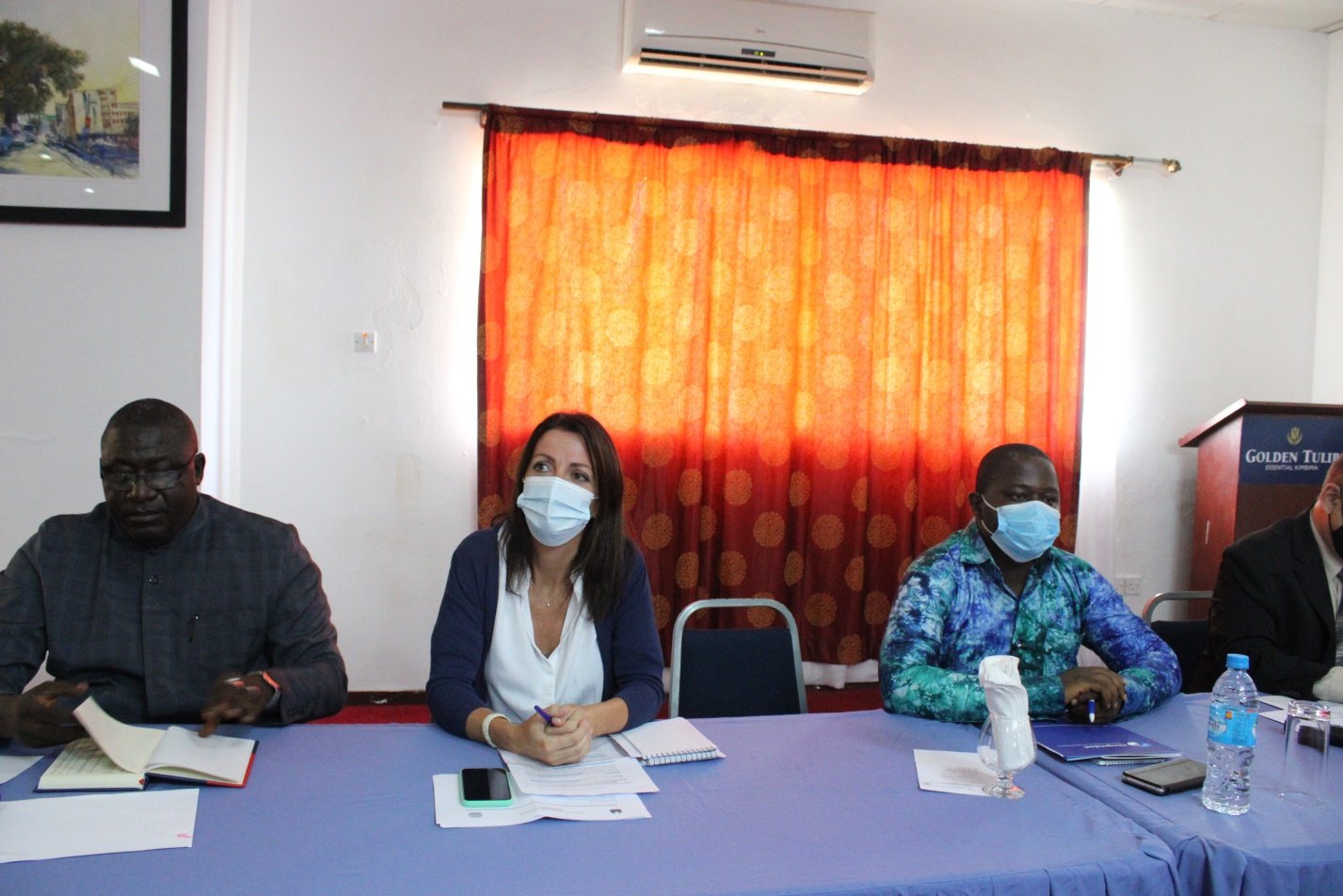
The National Civil Registration (NCRA) on the 8th November 2021 has held a stakeholders consultative meeting on the Review of the National Civil Registration Authority Act and development of Civil Registration Regulations at the Golden Tulip, Essential Kimbima Hotel, Freetown.
Speaking at the event Mr. Osman Sam Banya said NCRA was established by an Act of Parliament in 2016 which mandates the Authority to undertake the continuous permanent, universal, compulsory registration of vital events such as Births, Deaths, Marriages, Divorce, Adoption, Recognition of citizens and Residents in Sierra Leone.
The NCRA with support from the European Union (EU) Technical Assistant team and the United Nations Development Program (UNDP) have embarked on the Review of the Authority`s Legislation.
He said the Act which is in conflict with other institutions legislations is mandatory of the institution to Review the Act taking it to cabinet, and later to parliament for reconsideration.
He continued that the importance of the Act to be reviewed is the confusion it has brought about in the Western Area, Eastern urban, Western Area Urban, south, Eastern province, Northern, and Western province, and the valid contributions these regions will input towards the review.
Director General of the NCRA, Mohamed Mubashir Massaquoi thanked its partners for being part of the process of reviewing the NCRA Act of 2016.
He explained about the mandate of NCRA which among other things include conducting compulsory registration for citizens and non-citizens living in Sierra Leone.
Mr. Massaquoi said the mandate of NCRA also include to provide the issuance of identification cards, to be responsible for the registration of Births, Adoptions, Deaths, causes of deaths, marriages, divorce, nullities of marriages within the jurisdiction of Sierra Leone.
He said in the execution of its services, the NCRA has been grappling with challenges in the event of lacunas, overlapping mandates with mandates of other state serving authorities, specifically those legislations that were repealed by the NCRA Act.
He maintained that the function of NCRA is in conflict with other regulatory bodies which were not repealed by the Act.
“There is an absence of civil Registration Regulation to clearly state out the requirements procedures for the registration of vital events and the Civil Registration to be specific”, he noted.
Mr. Massaquoi said earlier on there isn’t a national identity card regulation which clearly sets out the regulations for obtaining, renewing of identity cards, adding that the need to overcome these challenges prompted of the urgent review of the NCRA Act and the development for registration for civil Registration Management in Sierra Leone.
“This process has come a long way, in 2019 a comprehensive country assessment on civil Registration, identity Management was funded by UNICEF and the government of Sierra Leone for technical assistance from the United Nations Economic Commission for Africa which reveals the need for legal reform to take place for an integrated registration reform to become functional and effective”, Mr. Massaquoi noted.
Mr. Massaquoi continued that NCRA has taken steps to address some of these challenges through the signing of memoranda and other mechanisms but they have not been exhaustive to address the challenges, adding that the NCRA system is exceptional.
He furthermore continued that the European Union, Irish Aid Embassy and partners in the identity system management ecosystem have showed support in the review of the NCRA Act in a bid to iron out any legal ramifications to ensure the effective and efficient functioning of NCRA.
After giving the reasons for legal reforms of the NCRA, he said the contribution of development partners has led to the conclusion of reformation of the NCRA Act of 2016 that will be presented in parliament by the end of the year.
Representative from the European Union gave a brief statement expressing their support towards the reformation of the NCRA Act of 2016 and the development of civil Registration Regulations.
Since 2018 the EU has been supporting Sierra Leone in the government sector and particularly in the area of the Civil Registration.
She initiated that the EU with the NCRA deem it fit to review the NCRA Act of 2016 reviewed and that the EU deployed the technical assistance in support of the NCRA to review the Act.
The Deputy Minister of internal Affairs Lahai Lawrence Leema said the establishment of the NCRA by government has greatly improved the registration of vital events.
He continued that the fundamental role of the civil registration and vital statistics are to support the administrative functions as information compiled using the registration method provides essential data for national or regional planning in health, education, electoral registers, national identification and other sectors.
The minister continued that the primary role of the civil registration is to establish legal documents on identity and vital event registry as required by law.
He explained that the civil registration process generates documentation that supports an individual`s right to recognition of a person and acknowledges their formal relationship with the state.
He concluded by mentioning that the civil registration supports gender equality as marriage and divorce are both effective tools for gender empowerment as they both enable social benefits and protection which serves as a key data source in measuring progress in the sustainable development goals.